Used 5.4 Triton Engine for Sale
A failed 5.4L Triton is an expensive problem no matter which Ford or Lincoln it sits in. Between diagnostics, a pulled engine, and reinstall labor, a shop repair bill for a full engine swap commonly lands between $3,500 and $7,000, and that is before you have paid a dime for the actual engine. A lot of F-150 and Expedition owners find that number out the hard way, right around the time a check engine light turns into a knock they can hear from the driveway.
- Used OEM 5.4L Triton Engines Available
- Avoid $6,000+ Repair Bill
- Matched by VIN & Valve Configuration
- 2-Valve or 3-Valve Know Which You Need
- Shipping Included in the Quote
- Seller-Backed Warranty Available
FIND YOUR PART NOW!
CONGRATS !
You're Almost Done
A brand new crate 5.4L is not usually on the table. Ford stopped installing the 5.4L Triton in new vehicles years ago, so new-old-stock long blocks are scarce and expensive when they exist at all, and a full aftermarket long block build can run well past $6,000 before installation. For most owners, a used 5.4 Triton engine pulled from a low-mileage donor vehicle is the more realistic path: the same factory architecture, at a fraction of the replacement cost, without the lead time of a custom rebuild.
That is where Used Auto Parts Pro fits in. UAPP is a marketplace, not a parts warehouse. We do not hold engine inventory and we do not sell engines directly. What we do is connect you with a nationwide network of verified salvage yards, engine sellers, and recyclers, match listings to your vehicle using your VIN, and let you compare quotes side by side so you are not calling around to a dozen yards on your own.
Twenty Years in Production Says Something
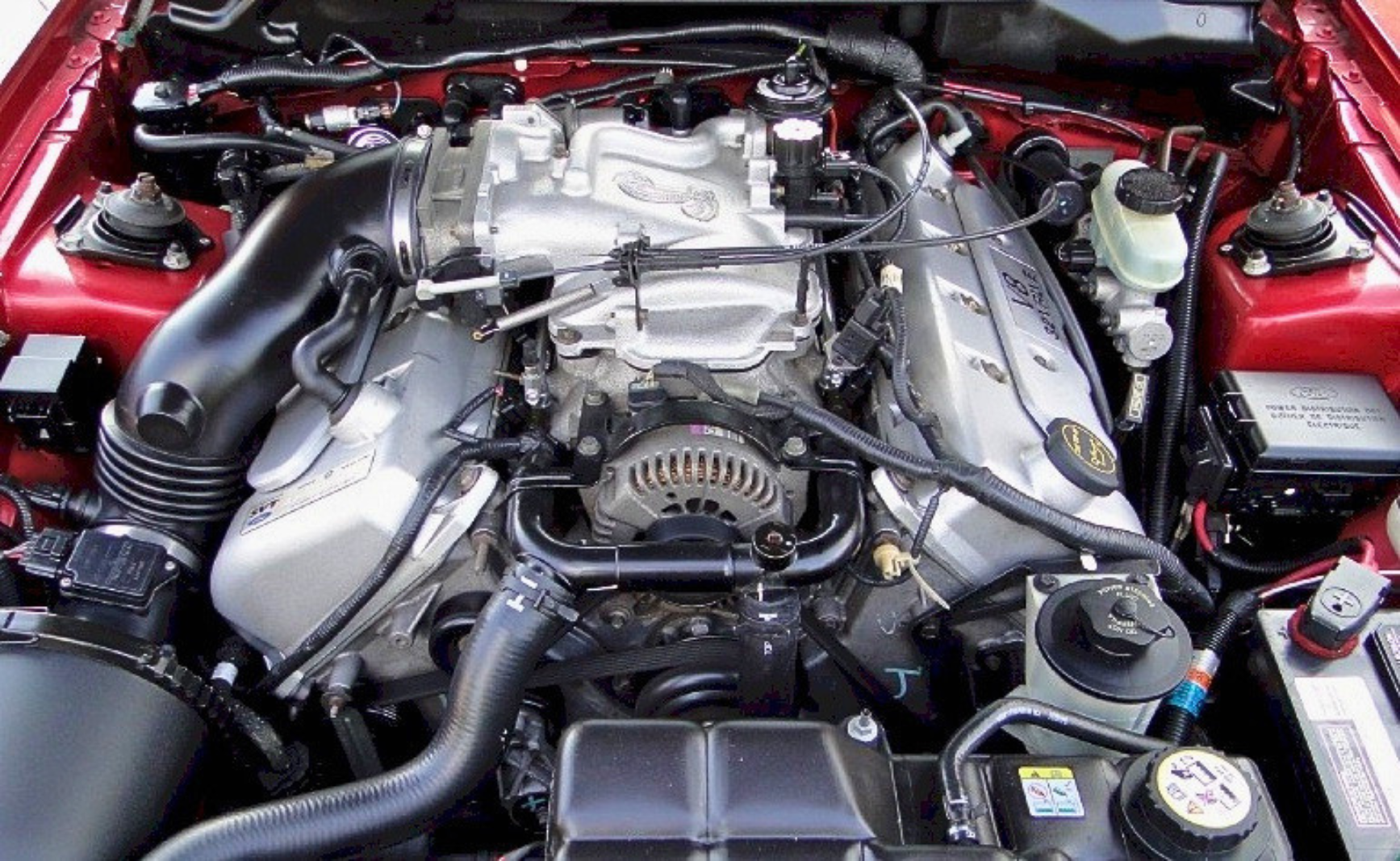
Ford kept the 5.4L Triton in production from 1997 to 2017. That’s not stubbornness, that’s the market telling Ford to keep building something that works. Millions of F-150s, F-250s, F-350s, Expeditions, Navigators, and E-Series vans ran this engine. Mechanics know it by feel. Parts are everywhere. When you’re searching for a used 5.4 Ford engine for sale, you’re tapping into one of the best-supported engine ecosystems in American truck history.
The 5.4L belongs to Ford’s Modular engine family, which means the aftermarket support is massive and the mechanical knowledge base is equally deep. Whether you’re hunting a used 5.4 engine for sale locally or having one shipped in from across the country, you’ll have no shortage of shops that can do the installation properly and diagnose anything that comes up afterward.
Output ranged from roughly 235 horsepower in the original two-valve configuration up past 300 horsepower in the later three-valve units. Across all of them, the personality stayed the same: strong low-end torque, solid reliability under sustained load, and enough displacement to make trailer towing feel like a non-event. Our sellers have a wide range of used 5.4 Triton engines for sale.
This Engine Has Known Issues. Here’s What They Are
Let’s be straight about this: the 5.4 Triton has a documented list of failure modes that every serious buyer needs to understand before they hand over money for a used 5.4 Triton engine for sale. These aren’t obscure or rare issues.
Spark Plug Blowouts, The Two-Valve Nightmare
The two-valve version of the 5.4 used a cylinder head design with surprisingly shallow spark plug thread depth. High heat cycles caused the plugs to either seize completely, snapping off during removal, or blow themselves right out of the head under compression. A used 5.4 Ford engine for sale that’s had this problem repaired properly (thread inserts, Heli-Coil repair) is fine. One that’s had it bodged or not addressed at all is going to be a headache from the first tune-up.
Always ask the seller directly: Have any spark plug threads been repaired on this motor?
If they don’t know or they hedge the answer, that’s important information about how well they actually know what they’re selling.
The Ford 5.4 Triton is just one of many components we carry. Browse our complete inventory of used Ford auto parts to find everything your Ford vehicle needs.
4. Quick Answer
What is a used 5.4 Triton engine? It is a factory Ford 5.4L modular V8 (Triton) engine removed from a donor vehicle, most commonly after an accident or a total loss, rather than an engine failure. A used 5.4 Triton typically comes as a long block or complete engine assembly and is sold through independent sellers rather than manufactured new.
How much does a used 5.4 Triton engine cost? Used 5.4L Triton engines generally run $700 to $2,800, depending on mileage, documentation, and whether it is the 2-valve or 3-valve version. A comparable new-condition long block or aftermarket rebuild typically starts around $4,500 and can exceed $7,000 before labor.
Why do buyers choose a used 5.4 Triton over a new or remanufactured one? A used OEM engine costs a fraction of new or remanufactured pricing, uses factory Ford components rather than aftermarket internals, and is generally available faster since it does not need to be built to order.
How does Used Auto Parts Pro help? UAPP matches your VIN to compatible 5.4L Triton listings across its seller network and lets you compare quotes. We do not inspect, test, warehouse, or ship the engines ourselves; those steps are handled by the individual seller, and terms can vary from one seller to the next.
5. Key Takeaways
- The 5.4L Triton was built in two significantly different versions, 2-valve (1997 to roughly 2004) and 3-valve (2004 through the engine’s final years), and they are not interchangeable. Confirm which version your vehicle uses before requesting quotes.
- Typical used pricing runs $700 to $2,800; new or aftermarket rebuild pricing typically starts around $4,500 and climbs from there before labor.
- A VIN match gives strong fitment confidence, but it is not an absolute guarantee. Confirm the physical engine code against the listing before you buy.
- Warranty terms are set by the individual seller, not by UAPP, and vary by seller and by part. Get warranty terms in writing before purchase.
- Inspection and testing practices (compression checks, mileage documentation, run-and-drive video) vary by seller. Ask directly rather than assuming every listing was tested the same way.
- Shipping cost is included in the seller’s quoted price for the contiguous 48 states; it is not a separate line item and it is not advertised as free.
- Certain 2004 to 2008 3-valve Triton and modular V8/V10 engines were part of a Ford spark plug class-action settlement over plugs that could break during removal. If your vehicle falls in that range, check eligibility directly with Ford before assuming a used replacement engine changes that history.
- UAPP is a marketplace. We connect buyers to independent sellers; we do not hold inventory and do not sell engines directly.
6. Engine Overview: 2-Valve vs. 3-Valve 5.4L Triton
What Is the Ford 5.4 Triton Engine?
The 5.4L Triton is Ford’s 5.4-liter (330 cubic inch) SOHC modular V8, built from 1997 into the mid-2010s across full-size trucks, SUVs, and vans. It shares its basic modular architecture with the 4.6L Triton V8 but with a longer stroke for added displacement. Ford sold it in two meaningfully different configurations, and knowing which one your vehicle has is the single most important fitment question before you buy used.
Note: the SOHC truck-based 5.4L Triton covered on this page is a different engine from the supercharged DOHC 5.4L used in the 2007 to 2014 Shelby GT500 and the Ford GT. If you are working on a GT500 or Ford GT, you need that performance variant, not the Triton covered here; the two share a displacement number but very little else.
2-Valve 5.4L Triton (1997 to roughly 2004)
- Applications: 1997 to 2003/2004 F-150, 1997 to 2004 Expedition, 1998 to 2004 Lincoln Navigator, 1999 to 2004 F-250/F-350 Super Duty, 2000 to 2005 Excursion, 1997 to 2004 E-Series vans.
- Output: roughly 235 to 260 horsepower and 330 to 350 lb-ft of torque, depending on year and application.
- Known compatibility note: the aluminum cylinder heads on early 2-valve engines used shallow spark plug threads, which could lead to plugs backing out or blowing out under compression. Ford issued thread-repair kits and revised heads for this, so a well-documented used 2-valve engine may already have had this addressed. Ask the seller directly.
3-Valve 5.4L Triton with Variable Camshaft Timing (2004 to the engine’s final production years)
- Applications: 2004 to 2014 F-150, 2005 to 2014 Expedition, 2005 to 2014 Lincoln Navigator, 2005 to 2010 F-250/F-350 Super Duty (replaced by the 6.2L for 2011), 2006 to 2008 Lincoln Mark LT, and 2005 to roughly 2016 E-Series vans, which kept the 3-valve Triton in production longer than the pickups and SUVs.
- Output: roughly 300 to 320 horsepower and 365 to 405 lb-ft of torque, depending on year and application.
- Known compatibility note: the 3-valve heads added variable camshaft timing (VCT), which depends on clean oil and healthy oil pressure to keep the cam phasers from rattling or throwing codes. This generation is also the one tied to the spark plug class-action settlement described below, since carbon buildup on 3-valve plugs made them prone to breaking during removal.
Because the 2-valve and 3-valve heads, intake systems, and VCT components are not interchangeable, a listing described simply as “5.4 Triton” without a year range is not enough to confirm fitment. Always confirm the engine code and production year against your VIN before requesting a quote.
7. Benefits of a Used 5.4 Triton Engine
Why buy used OEM instead of new or aftermarket? A used 5.4L Triton is a factory-built engine that already proved itself on the road, at a fraction of new or remanufactured pricing, and it is generally available faster because it does not need to be built to order.
- Lower cost per mile of remaining life. A well-documented, lower-mileage pull can offer years of service at a fraction of new replacement pricing.
- Factory-correct fit. A used engine pulled from the same platform uses the same mounting points, sensors, and wiring architecture your vehicle already expects, which reduces the adaptation work compared to some aftermarket long blocks.
- Faster turnaround. Because used engines already exist in a seller’s yard rather than needing to be built, they are typically available to ship sooner than a custom remanufactured order.
- A track record you can partially verify. Where mileage and service history are documented, you get more insight into an engine’s condition than you would with an engine built from mixed aftermarket components.
8. Compatibility: What Actually Determines Fitment
Does every 5.4 Triton fit every truck that uses a 5.4L? No. Fitment depends on more than displacement. The 2-valve and 3-valve generations are not interchangeable, and even within the 3-valve generation, accessory brackets, engine mounts, and wiring harness connectors can differ between an F-150, an E-Series van, and a Super Duty truck built in the same year.
How does VIN matching help? Submitting your 17-digit VIN lets sellers in the UAPP network match your vehicle’s original engine code, model year, and platform to compatible listings. This gives strong fitment confidence and meaningfully narrows the field, but it is not an absolute guarantee of fit. Always confirm the physical engine code stamped on the block against the seller’s listing before finalizing a purchase, and ask whether the accessory brackets, oil pan, and flexplate/flywheel are included, since these can differ by application even within the same engine code.
Common buyer mistakes worth avoiding:
- Assuming a 3-valve engine from an F-150 will drop into a 2-valve Super Duty, or vice versa.
- Assuming an E-Series van engine’s accessory mounting matches a pickup truck’s, since commercial van applications sometimes use different brackets and pulley setups.
- Buying based on year alone without confirming the 8th-character engine code on the VIN, since Ford ran overlapping engine options in some model years.
9. Common Problems With the 5.4 Triton
What commonly goes wrong with the 5.4 Triton? The two generations have different documented weak points, and neither issue means the entire engine family is unreliable; both are well understood and, in many cases, already addressed on higher-mileage used units.
Spark plug thread and breakage issues. Early 2-valve engines were prone to spark plugs backing out due to shallow thread engagement in the aluminum heads. On 3-valve engines, a different issue emerged: carbon buildup around the plug tip could cause plugs to snap during removal, which led to a Ford spark plug class-action settlement covering certain 2004 to 2008 3-valve Triton and modular V8/V10 engines. If your vehicle falls in that range, check settlement eligibility and any manufacturer remedy directly with Ford. That settlement and any related manufacturer remedy is separate from the seller-set warranty on a used replacement engine purchased through UAPP’s network; the two should not be confused.
Timing chain and camshaft phaser wear (3-valve). The VCT system on 3-valve engines relies on clean oil and stable oil pressure. Infrequent oil changes or extended oil change intervals can accelerate phaser wear, producing a rattle on cold start or a check engine light for codes related to camshaft timing (commonly P0011 or P0021).
Oil pump and top-end wear at high mileage. On engines well past 150,000 miles, some sellers report reduced oil pressure tied to normal wear rather than a specific design flaw. This is a mileage and maintenance factor to ask about rather than an across-the-board defect.
Head gasket concerns. Head gasket failure is documented on the 5.4L Triton but is less common and less universally reported than the spark plug and phaser issues above. It is generally tied to overheating events rather than a standalone design flaw. A check engine light or a rough idle alone does not necessarily mean the engine needs replacement; a proper diagnostic is worth the time before you commit to buying a replacement engine.
10. Inspection and Quality Standards
Are used 5.4 Triton engines tested before sale? Inspection and testing practices vary by seller and by engine; there is no single industry-wide standard applied to every listing in the UAPP network. Rather than assuming a blanket testing process, ask each seller directly:
- Is documented mileage available, and does it come from the donor vehicle’s title, dashboard photo, or a CARFAX-style record?
- Was a compression test performed, and can the results be shared in writing?
- Is there a run video or cold-start video available?
- Has the spark plug thread condition or the timing chain/phaser condition been checked or serviced?
- What does the engine include: accessories, oil pan, flexplate, sensors, wiring harness?
11. Warranty Information
Do used 5.4 Triton engines come with a warranty? Warranty coverage is not standardized across the marketplace. It varies by seller and by part, and is set individually by each seller rather than by UAPP. Some sellers offer 30-day, 60-day, or longer warranties on the engine itself; others sell as-is. Warranties typically cover the engine assembly and usually exclude labor, consumables, and damage from improper installation. Always get warranty terms in writing before purchase, and confirm exactly what is and is not covered, including whether the electrical and sensor components are included.
12. Shipping Information
How is a used 5.4 Triton engine shipped? Shipping cost is included in the seller’s quoted price for the contiguous 48 states; it is not billed separately and it is not offered as a free add-on. Most engines ship via LTL freight on a pallet, typically within 3 to 10 business days depending on the seller’s location and the destination. Alaska and Hawaii shipments usually take longer and may involve different logistics; ask your seller for a specific timeline and any additional freight considerations before you commit to a quote.
13. Buying Guide
How do I buy a used 5.4 Triton the right way?
- Confirm your engine code. Check your VIN’s 8th character and your vehicle’s build sheet to confirm whether you need a 2-valve or 3-valve 5.4L Triton.
- Submit your VIN through UAPP. This lets sellers in the network match listings to your specific vehicle and model year.
- Compare quotes, not just price. Look at mileage, documentation, what is included (accessories, oil pan, flexplate), and warranty terms side by side.
- Ask about testing and documentation. Request compression numbers, run video, or mileage verification directly from the seller before committing.
- Confirm installation requirements. Ask whether the engine includes the wiring harness and sensors your specific application needs, and whether any PCM programming will be required.
- Get everything in writing. Price, warranty terms, what is included, and estimated shipping timeline should all be confirmed in writing before you pay.
14. Installation Considerations
Installing a 5.4 Triton is a full engine swap, not a bolt-in weekend project for most owners, and professional installation is recommended. A few things worth planning for:
- PCM and immobilizer compatibility. Depending on model year, your vehicle’s PCM may need to be matched or reprogrammed to the replacement engine, particularly if the donor engine came from a different model year.
- Accessory transfer. Alternators, power steering pumps, and AC compressors are often transferred from your original engine rather than included with the used long block. Confirm what the listing includes before assuming a plug-and-play swap.
- Wear-item replacement. Given the labor already involved in an engine swap, most shops recommend replacing gaskets, timing components if not recently serviced, and fluids at the same time rather than reusing worn parts.
- Spark plug and phaser inspection at install. Since these are the 5.4L Triton’s most documented weak points, having a shop inspect or address spark plug threads (2-valve) or cam phasers (3-valve) during installation can prevent a comeback repair.
15. Why Choose Used Auto Parts Pro
- Verified seller network. UAPP works with vetted salvage yards and engine sellers across the country rather than an anonymous listing board.
- VIN-based matching. Submitting your VIN gives you strong fitment confidence for your specific F-150, Expedition, Navigator, Super Duty, or E-Series application.
- Nationwide reach. More sellers in the network means more chances to find a well-documented, lower-mileage 5.4L Triton.
- Transparent, quote-based pricing. Shipping cost is included in your seller’s quote, with no separate freight surprise later.
- OEM-first, with transparency on alternatives. UAPP prioritizes OEM used engines, and where a seller lists a remanufactured or non-OEM-component unit, that distinction is disclosed so you can choose what fits your budget and expectations.
- Marketplace transparency. UAPP does not hold inventory and does not sell engines directly; we connect you to sellers and let you compare their terms.
| Factor | Used (Seller Network) | Remanufactured | New/Aftermarket Long Block |
|---|---|---|---|
| Typical price | $700 to $2,800 | $2,800 to $4,800 | $4,500 to $7,000+ |
| Components | Original Ford factory parts | Mix of OEM and aftermarket internals | Mostly aftermarket internals |
| Availability | Depends on donor vehicle supply | Usually built to order | Usually built to order |
| Typical lead time | Often fastest, ships from existing stock | Moderate, may be built on order | Longest, often custom-built |
| Warranty | Varies by seller, confirm in writing | Often longer, confirm terms | Often longest, confirm terms |
| Best for | Budget-conscious buyers wanting OEM parts | Buyers wanting fresh internals with some OEM lineage | Buyers wanting all-new components regardless of cost |
Frequently Asked Questions
Most used 5.4L Triton engines run $700 to $2,800 depending on mileage, documentation, and generation (2-valve or 3-valve). Exact pricing depends on the individual seller's quote.
The 2-valve version (1997 to roughly 2004) uses simpler cylinder heads and produces about 235 to 260 horsepower. The 3-valve version (2004 onward) added variable camshaft timing and produces about 300 to 320 horsepower. They are not interchangeable.
Often the underlying engine code is shared across these platforms in overlapping years, but accessory brackets, wiring, and mounting can differ. Confirm fitment using your VIN rather than assuming based on displacement alone.
Often the underlying engine code is shared across these platforms in overlapping years, but accessory brackets, wiring, and mounting can differ. Confirm fitment using your VIN rather than assuming based on displacement alone.
No. UAPP is a marketplace that connects buyers with independent, verified sellers. We do not hold engine inventory and do not sell engines directly; each transaction and its terms are handled by the seller.
No. UAPP is a marketplace that connects buyers with independent, verified sellers. We do not hold engine inventory and do not sell engines directly; each transaction and its terms are handled by the seller.
Warranty terms vary by seller and by part. UAPP does not set warranty policy; each seller sets their own terms, so confirm coverage in writing before purchasing.
VIN matching gives strong fitment confidence by identifying your vehicle's original engine code and platform, but it is not an absolute guarantee. Always confirm the physical engine code on the listing against your VIN before buying.
Certain 2004 to 2008 3-valve Triton and modular V8/V10 engines were part of a class-action settlement over spark plugs that could break during removal due to carbon buildup. If your vehicle is in that range, check eligibility directly with Ford; this is separate from the seller-set warranty on a used replacement engine.
Most engines ship via LTL freight and arrive within 3 to 10 business days in the contiguous 48 states, depending on the seller's location and your delivery address. Alaska and Hawaii typically take longer.
Shop labor for a full engine swap commonly runs several hours to a full day or more depending on the vehicle and shop rates; ask your installer for a specific quote based on your exact application.
Testing and inspection practices vary by seller and by engine. Ask directly whether a compression test, mileage documentation, or run video is available before purchasing.
Availability depends on what donor vehicles have recently come through the seller network. Lower-mileage units with documentation typically sit at the higher end of the used pricing range.
Availability depends on what donor vehicles have recently come through the seller network. Lower-mileage units with documentation typically sit at the higher end of the used pricing range.
Confirm the engine code against your VIN, ask for mileage documentation and any available compression or run-video evidence,
Conclusion
A failed 5.4L Triton does not have to mean a $6,000-plus repair bill. Once you know whether your vehicle needs the 2-valve or 3-valve version, a used OEM engine matched to your VIN is usually the most practical way to get your F-150, Expedition, Navigator, Super Duty, Excursion, or E-Series van back on the road without paying new or remanufactured pricing. Used Auto Parts Pro connects you with verified sellers across its network, matches listings to your vehicle, and lets you compare quotes, warranty terms, and documentation side by side so you can make the call with real information in front of you. When you are ready, submit your VIN to start comparing quotes from sellers who already have the right 5.4 Triton fitment on hand.
We hold a huge stock of Used car parts for years. You can explore other used parts mentioned below:
- Used GMC Engine
- Used International Harvestot Engine
- Used Hummer Engine
- Used Hyundai Engine
- Used Infiniti Engine
- Used Isuzu Engine
- Used Jaguar Engine
- Used Jeep Engine
- Used Kia Engine
- Used Land Rover Engine
- Used Licoln Engine
- Used Maserati Engine
- Used Oldsmobile Engine
- Used Peugot Engine
- Used Plymouth Engine
- Used Pontiac Engine
- Used Renault Engine
- Used Saab Engine
- Used Saturn Engine
- Used Scion Engine
- Used Suzuki Engine
- Used Tesla Engine
- Used Triumph Engine
- Used Volkswagen Engine
- Used Volvo Engine
- Used Toyota Engine
- Used BMW engine
- Used Porsche Engine
- Used Chevy Engine
- Used lexus Engine
- Used Nissan Engine
- Used Cadillac Engine
- Used Engine in New York
- Used Engine in Rhode Island
- Used Engine in Oregon
- Used Engine in Ohio
- Used Engine in South Carolina
- Used Engine in Minnesota
- Used Engine in Michigan
- Used Engine in Delaware
- Used Engine in California
- Used Engine in Arizona
- Used Engine in New Mexico
- Used Engine in New Jersey
- Used Engine in New Hampshire
- Used Engine in Alabama
- Used Engine in Mississippi
- Used Engine in South Dakota
- Used Engine in Aouth Dakota
- Used Engine in South Mnaine
- Used Engine in South Texas
- Used Engine in South Wyoming
- Used Engine in Vermont
- Used Engine in North Carolina
- Used Engine in North Dakota
- Used Engine in Oklahoma
- Used Engine in Pennsylvania
- Used Engine in Tennessee
- Used Engine in Texas
- Used Engine in Utah
- Used Engine in Iowa
- Used Engine in Wyoming
- Used Engine in Wisconsin
- Used Engine in Virginia
- Used Engine in Idaho
- Used Engine in Washington
- Used Engine in DC
- Used Engine in West Virginia
- Used Engine in Indiana
- Used Engine in Kansas
- Used Engine in Kentucky
- Used Engine in Louisiana
- Used Engine in Maine
- Used Engine in Maryland