Used Honda Car Engines for Sale - Find the Right Engine Code for Your Vehicle
A Honda engine failure is a strange kind of bad news, because Hondas have such a strong reputation for going the distance that a dead engine often comes as a genuine surprise. Timing belt neglect, an overheating event, a cracked block from a hard freeze, or simply a car that outlived its original engine while the rest of the vehicle stayed solid; whatever the cause, a new engine from a Honda dealer can run well into four figures before labor. For most owners, that number doesn’t make sense on a car that’s otherwise in good shape.
- Used OEM Honda Engines from $250
- Save vs $3,000–$6,000+ New Dealer Price
- Matched by VIN & Engine Code
- Shipping Included in the Quote
- Seller-Backed Warranty Available
- Shipping Included in the Quote
FIND YOUR PART NOW!
CONGRATS !
You're Almost Done
A used OEM Honda engine, sourced from a low-mileage donor vehicle and matched to your exact engine code, is the practical alternative. It’s the same engine Honda built for your specific application, not an approximation, and the price reflects that it has service history rather than zero miles.
Used Auto Parts Pro is a marketplace that connects you with verified independent sellers across the United States who list used Honda engines. We do not hold inventory or sell engines directly ourselves. What we do is route your request to sellers who carry the specific engine code your Honda needs, so you can compare real quotes instead of guessing.
Quick Answer: What Is a Used Honda Car Engine?
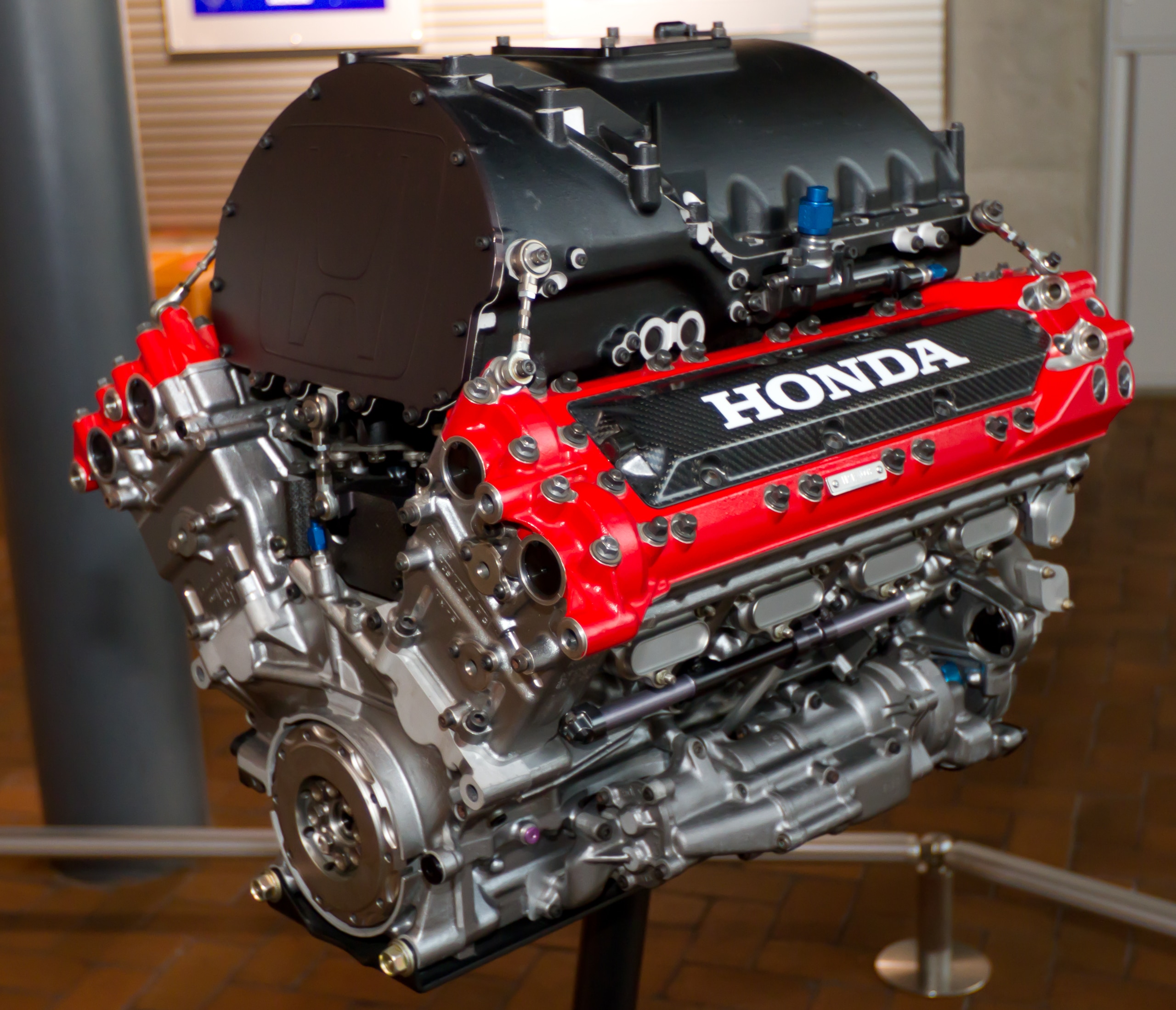
A used Honda car engine is an original factory engine removed from a donor Honda vehicle, typically one retired through an accident, insurance total loss, or high body mileage while the drivetrain remained sound, and listed for resale by an independent seller. It is matched to your vehicle using your VIN and engine code rather than year and model alone, since Honda commonly used several distinct engine variants within a single model and year. Inspection and testing practices vary by seller; ask for mileage, condition notes, and available test documentation before ordering. Used Honda engines through Used Auto Parts Pro’s seller network typically run $250 to $1,600 depending on engine family, compared to $3,000 to $6,000 or more for a new engine from a Honda dealer before labor.
Key Takeaways
- Honda’s engine families overlap in ways that catch buyers off guard; the K24A2 in an Accord and the K24A4 in a CR-V are both “2.4L K-series” but are not interchangeable in every context.
- Used Honda engines are typically priced well below new OEM units. Final pricing depends on engine family, mileage, and seller.
- VIN-based matching gives you strong fitment confidence, since your VIN’s 8th character identifies your exact engine code.
- Inspection and testing practices vary by seller; ask what has been done to a specific listing before you buy.
- Many sellers offer warranty coverage on used engines; terms, duration, and what’s covered vary by seller and part.
- Shipping costs are included in the seller’s quote for engines shipped to the contiguous 48 states.
- Used Auto Parts Pro is a marketplace connector; sellers own the parts, set pricing and warranty terms, and ship directly to you.
Honda Engine Families: What You Need to Know Before You Order
Honda’s reputation for reliability is well-earned, and it’s exactly why the used engine market for this brand is so active: engines from high-mileage Hondas often still have plenty of service life left. But that same production history means several engine families share a displacement and a name while differing enough internally that ordering by “2.4L Honda engine” alone routinely produces the wrong part.
K24A / K24Z / K24W, 2.4L inline four-cylinder
Applications: Accord (2003-2017), CR-V (2002-2016), Element (2003-2011), Acura TSX (2004-2008).
Typical price range: $300 to $1,200.
The K24 family includes multiple sub-variants. The K24A2 used in the Accord has a higher-compression head and i-VTEC tuning different from the K24A4 used in the CR-V. The K24Z3 (Accord, 2008-2012) and K24W (Accord, 2013-2017) are later evolutions with their own calibration. Confirm the engine code, not just displacement, before ordering.
K20A / K20Z, 2.0L inline four-cylinder
Applications: Civic Si (7th and 8th generation), Acura RSX Type-S, early CR-V, Element.
Typical price range: $350 to $1,400.
The K20A2 (RSX Type-S) and K20Z3 (Civic Si) differ in cam profile and compression ratio. JDM K20A units are popular for performance builds and available through select sellers.
J35Y / J35Z / J35A, 3.5L V6
Applications: Pilot (2003-present), Odyssey (2005-present), Accord V6 (2003-2017), Ridgeline, Passport.
Typical price range: $450 to $1,600.
The J35A is the earliest unit; J35Z and J35Y are later refinements. The J35Y4 (Pilot, 2016 onward) and J35Y6 (Odyssey, 2018 onward) introduced cylinder deactivation, which changes the oil system hardware. Confirm whether your vehicle uses cylinder deactivation before ordering.
R18A / R18B, 1.8L inline four-cylinder
Applications: Civic (2006-2015).
Typical price range: $250 to $900.
A high-volume engine with strong domestic salvage supply and a solid reliability record even at higher mileage.
L15B7 / L15BA, 1.5L turbocharged inline four-cylinder
Applications: Civic (2016-present), CR-V (2017-present), Accord (2018-2022).
Typical price range: $400 to $1,400.
Honda’s modern turbocharged engine, replacing the naturally aspirated 2.4L in several platforms. Availability is lower than the K24 family since it’s newer to the salvage market. The L15B7 (Civic) and L15BA (CR-V) have meaningful internal differences; confirm the exact sub-variant.
F22B / F23A, 2.2L and 2.3L (earlier Accords)
Applications: Accord (1990-2002).
Typical price range: $200 to $750.
Still in demand for owners keeping older Accords on the road. JDM F22B DOHC units are a popular alternative to the SOHC US-market version.
Across every family, the same rule applies: your VIN’s 8th character identifies the exact engine code your vehicle was built with, and that’s a more reliable starting point than displacement or model year alone.
Benefits of Buying a Used Honda Engine
Cost, without giving up factory compatibility: A used OEM Honda engine is the exact engine your car was built with; the same mounting points, the same wiring harness connectors, the same accessory drive, at a fraction of new-engine dealer pricing. There’s no adapter kit or aftermarket approximation involved.
Real-world proof of durability: A used engine pulled from a donor vehicle has already demonstrated it runs, unlike a remanufactured short block that hasn’t seen a mile since rebuild. For Honda specifically, where engines routinely outlast the rest of the vehicle, a 70,000-mile K24 from a totaled Accord is a meaningfully different proposition than a random used engine from a less durable brand.
Availability for older and lower-volume applications: Honda has stopped producing new replacement engines for some older platforms. For a 2005 Element or an early Civic Si, the used market is often the only source of a genuine OEM match.
Faster turnaround than backordered new parts: New-engine supply chains for older platforms can stretch to weeks. A compatible used engine sourced through the seller network can often be found and shipped considerably faster.
Compatibility: Why Year and Model Alone Aren’t Enough
Honda made a lot of running changes within model years and reused displacement figures across engine families that aren’t interchangeable. The most common compatibility mistakes:
- Ordering a “2.4L Honda engine” without specifying K24A2 vs. K24A4 vs. K24Z3 vs. K24W; these share displacement but differ in compression, calibration, and in some cases physical mounting.
- Assuming a J35 V6 is interchangeable across Pilot, Odyssey, and Accord applications without confirming cylinder deactivation hardware.
- Ordering by trim name alone on a Civic; the same model year can have an R18, a K20, or an L15B7 depending on trim and generation.
- Confirming transmission pairing; some engine and transmission combinations are specific to certain trims and are not universally interchangeable.
Providing your full 17-digit VIN when requesting a quote resolves all of this. The 8th character alone identifies your engine code, and the full VIN confirms generation, trim, and drivetrain configuration. VIN-based matching gives you strong fitment confidence, though no used part can be promised as an absolute fit in every case; confirming the physical engine code against the listing is still worth doing before installation.
Common Problems That Lead to a Honda Engine Replacement
- Timing belt failure on interference engines (older K-series and F-series applications): A snapped belt on an interference engine typically bends valves and can crack pistons, often making the engine uneconomical to repair.
- Overheating from a neglected cooling system: A warped head or blown head gasket from sustained overheating is a common reason for replacement rather than repair.
- Oil consumption on higher-mileage engines: Worn piston rings or valve seals eventually make an engine impractical to keep running economically.
- Rod knock or bearing failure from extended oil-change neglect: Once bearing damage sets in, a replacement engine is usually more cost-effective than an in-vehicle rebuild.
- Accident damage: A cracked block or bent components from a collision, even when the rest of the car is repairable.
If your Honda is showing a check engine light alone, with no unusual noise, smoke, or overheating, a full engine replacement may not be necessary. A proper diagnosis before ordering a replacement engine can save you from an unnecessary purchase.
Inspection and Quality Standards
Inspection and testing practices vary by seller and by engine. Where a seller does inspect or test an engine before listing it, that typically includes a compression check, a visual inspection for external damage or leaks, and a review of the donor vehicle’s mileage and history where available.
Before ordering, ask the seller:
- What is the mileage on the donor vehicle, and is there documentation?
- Was a compression test performed, and are the results available?
- Is there any visible evidence of oil or coolant contamination?
- Was the engine running at the time it was removed, or pulled after failure elsewhere in the vehicle?
A seller who can answer these clearly is generally the safer choice. Vague or evasive answers are worth treating as a caution sign.
Warranty Information
Warranty coverage on used Honda engines varies by seller and by part. Many sellers in the Used Auto Parts Pro network offer warranty coverage, and terms, duration, exclusions, and return procedures are set individually by each seller, not by Used Auto Parts Pro. Coverage generally applies to the engine itself and does not include installation labor. Confirm all warranty terms in writing before your order ships.
Shipping Information
Shipping costs for used Honda engines are included in the seller’s quoted price for the contiguous 48 states; there is no separate freight charge added at checkout. Most engines ship via LTL freight carrier within 24 to 72 hours of order confirmation and arrive within 2 to 5 business days, subject to carrier variance. Buyers in Alaska and Hawaii should confirm shipping terms directly with the seller, as additional freight arrangements may apply.
Buying Guide: How to Order the Right Honda Engine
- Confirm your engine code: Check your VIN’s 8th character, or look for the engine code stamped on the block itself, usually near the transmission bellhousing or on the front of the engine.
- Submit your VIN when requesting a quote: This lets sellers cross-reference your exact build rather than guessing from year and model alone.
- Compare quotes from multiple sellers: Look at donor mileage, condition notes, warranty terms, and total price with shipping included.
- Ask about testing and documentation: Request whatever inspection or test information the seller has available for the specific unit.
- Confirm installation requirements: Some Honda engine swaps require ECM programming or immobilizer relearning; confirm your installer is equipped for this before the engine ships.
Installation Considerations
Honda engine installation complexity varies by platform; some are straightforward engine-and-transmission swaps, while others involve more extensive disassembly depending on engine bay layout. A few points worth planning for:
- Honda’s immobilizer system (HIM) ties the ECM to the vehicle’s key transponder. If you’re also replacing the ECM, reprogramming is typically required; confirm your installer has Honda-compatible programming capability.
- Transfer accessories (alternator, power steering pump, intake components) from your original engine where the replacement doesn’t include them, and confirm compatibility before reusing.
- Replace timing belts, water pumps, and related wear items during installation if the donor engine’s maintenance history on these components isn’t documented.
- Budget for fresh fluids, gaskets, and seals as part of the installation, regardless of the engine’s condition.
Why Choose Used Auto Parts Pro
- Verified seller network: Sellers in the network are verified; inspection and testing practices vary by seller and part, so ask for details before you buy.
- VIN-based matching: Submit your VIN for the strongest available fitment confidence on Honda’s overlapping engine families.
- Nationwide reach: Your request goes to sellers across the country, not just a single local yard.
- Transparent pricing: Shipping is included in the seller’s quoted price.
- Seller-backed warranties: Many sellers offer warranty coverage; terms vary by seller and part.
- Honda-specific know-how: Our team understands the K-series, J-series, and turbo engine-code distinctions that make Honda sourcing different from other brands.
Used vs. Remanufactured vs. New Honda Engines
| Factor | Used OEM | Remanufactured | New OEM |
|---|---|---|---|
| Cost | Lowest | Moderate | Highest |
| Origin | Original Honda factory engine | Rebuilt to spec, new wear parts | New from Honda |
| Warranty | Varies by seller | Often 1-2 years | Full manufacturer warranty |
| Availability | Depends on donor supply by engine code | Available for common engine codes | Always available |
| Best for | Budget-conscious repairs, older vehicles | Long-term keepers wanting fresher internals | Newer vehicles, warranty-sensitive owners |
For most Honda owners repairing a vehicle they intend to keep for several more years, a used OEM engine matched to the correct engine code offers the best balance of cost and proven reliability.
Frequently Asked Questions
Check the 8th character of your 17-digit VIN, or look for the code stamped directly on the engine block, typically near the transmission bellhousing. The engine code, not just displacement, is what determines compatibility for Honda applications.
Prices vary by engine family. The R18A and K24A generally run $250 to $1,200. The J35 V6 family runs $450 to $1,600. The newer L15B7 turbo engine runs $400 to $1,400, with pricing on the higher end due to lower current salvage supply. These are estimates; final pricing depends on seller, mileage, and condition.
Not necessarily. Both use the K24 2.4L platform, but the Accord's K24A2 has a higher-compression head and different tuning than the CR-V's K24A4. Confirm the specific engine code before assuming interchangeability
If you are also replacing the ECM, yes; Honda's immobilizer system ties the ECM to your vehicle's key transponder, and a replacement module typically needs reprogramming. If you are reusing your original ECM with a used engine, reprogramming is generally not required, though confirm this with your installer for your specific application.
Lower mileage is generally preferable, but documented maintenance history matters as much as the odometer reading. A well-maintained 90,000-mile engine can be a better buy than an undocumented 50,000-mile unit. Ask the seller for whatever donor vehicle history is available.
Yes, some sellers in the network carry JDM-sourced Honda engines. Japanese vehicle retirement cycles often produce lower-mileage engines than equivalent US domestic salvage units. Confirm emissions compatibility with your state and request mileage documentation before ordering a JDM unit.
Warranty coverage varies by seller and by part. Many sellers in the network offer coverage on used engines, but terms and duration are set individually. Confirm all terms in writing before your order ships.
Most engines ship via LTL freight within 24 to 72 hours of order confirmation and arrive within 2 to 5 business days for most US locations, subject to carrier variance. Shipping costs are included in the seller's quote
Engine replacement is a substantial job requiring lifting equipment and mechanical experience. Some Honda platforms are more accessible than others. Most owners use a qualified mechanic, particularly if ECM programming or immobilizer relearning is involved.
Both are 1.8L Civic engines from the same generation with only minor calibration differences depending on trim and transmission pairing. They are closer to interchangeable than most Honda engine-code pairs, but confirming the exact code against your VIN is still the safer approach.
This varies by listing. Some sellers include the full accessory set (alternator, power steering pump, intake components); others sell a long block only. Confirm exactly what is included before ordering to avoid buying duplicate parts or missing components during installation.
Confirm the engine code stamped on the block matches your VIN's 8th character. Check the oil fill cap and dipstick for milky residue, which can indicate coolant contamination in the donor engine's history. Ask the seller for mileage documentation and any available compression test results.
It depends on the failure. A minor issue like a valve cover gasket leak is worth repairing. Rod knock, a cracked block, or bent valves from a timing belt failure typically make replacement the more economical path. A qualified mechanic's diagnosis is the best way to decide.
Yes, in most cases. Sellers in the network carry engines for older Honda models including the Element, Prelude, and early Civic generations, though availability may be more limited than for current-generation vehicles. Contact us if the search tool doesn't surface results for an older model.
No. A single Accord model year can be sold with the 2.4L K-series four-cylinder, the 3.5L J-series V6, or, in later years, the 1.5L turbocharged L15B7, depending on trim. Always confirm engine code rather than assuming based on model year alone.
Cylinder deactivation, used on later J35Y4 and J35Y6 V6 engines, temporarily shuts down some cylinders under light load to improve fuel economy. It requires different oil system hardware than non-deactivation engines. Confirm whether your vehicle uses this feature before ordering a replacement V6.
Look for sellers who provide clear mileage documentation, answer questions about testing and condition directly, and offer warranty terms in writing. Used Auto Parts Pro works with verified sellers, but reviewing individual listing details before you buy is still worthwhile.
Contact the seller directly. Return and exchange policies are set at the seller level, so review those terms before ordering. Providing your VIN at the time of the original quote request is the best way to avoid a mismatch in the first place.
Conclusion
A failed engine doesn’t have to mean the end of the road for a Honda that’s otherwise in good shape. The used engine market for this brand is strong precisely because Honda engines tend to outlast the rest of the vehicle, which means a low-mileage K24, J35, or R18 pulled from a donor vehicle is a genuinely sound repair option, not a compromise.
The keys are straightforward: confirm your exact engine code from your VIN, ask sellers what testing and documentation they can provide, and get warranty terms in writing before you buy. Used Auto Parts Pro connects you with verified sellers across the country so you can compare real quotes and find the right engine for your specific Honda.
We hold a huge stock of Used car parts for years. You can explore other used parts mentioned below:
- Used GMC Engine
- Used International Harvestot Engine
- Used Hummer Engine
- Used Hyundai Engine
- Used Infiniti Engine
- Used Isuzu Engine
- Used Jaguar Engine
- Used Jeep Engine
- Used Kia Engine
- Used Land Rover Engine
- Used Licoln Engine
- Used Maserati Engine
- Used Oldsmobile Engine
- Used Peugot Engine
- Used Plymouth Engine
- Used Pontiac Engine
- Used Renault Engine
- Used Saab Engine
- Used Saturn Engine
- Used Scion Engine
- Used Suzuki Engine
- Used Tesla Engine
- Used Triumph Engine
- Used Volkswagen Engine
- Used Volvo Engine
- Used Toyota Engine
- Used BMW engine
- Used Porsche Engine
- Used Chevy Engine
- Used lexus Engine
- Used Nissan Engine
- Used Cadillac Engine
- Used Engine in New York
- Used Engine in Rhode Island
- Used Engine in Oregon
- Used Engine in Ohio
- Used Engine in South Carolina
- Used Engine in Minnesota
- Used Engine in Michigan
- Used Engine in Delaware
- Used Engine in California
- Used Engine in Arizona
- Used Engine in New Mexico
- Used Engine in New Jersey
- Used Engine in New Hampshire
- Used Engine in Alabama
- Used Engine in Mississippi
- Used Engine in South Dakota
- Used Engine in Aouth Dakota
- Used Engine in South Mnaine
- Used Engine in South Texas
- Used Engine in South Wyoming
- Used Engine in Vermont
- Used Engine in North Carolina
- Used Engine in North Dakota
- Used Engine in Oklahoma
- Used Engine in Pennsylvania
- Used Engine in Tennessee
- Used Engine in Texas
- Used Engine in Utah
- Used Engine in Iowa
- Used Engine in Wyoming
- Used Engine in Wisconsin
- Used Engine in Virginia
- Used Engine in Idaho
- Used Engine in Washington
- Used Engine in DC
- Used Engine in West Virginia
- Used Engine in Indiana
- Used Engine in Kansas
- Used Engine in Kentucky
- Used Engine in Louisiana
- Used Engine in Maine
- Used Engine in Maryland