Used Subaru Engine
An engine failure on a Subaru, whether it’s an EJ25 with a head gasket leak, a turbocharged FA20 with ringland damage, or an Outback that’s simply outlived its original engine, comes with a real financial decision attached. A new engine from a Subaru dealer can run past $3,500 to $5,000 before labor, and that number climbs further for turbocharged WRX and STI applications.
- Used OEM Subaru Boxer Engines
- Save vs Full Dealer Price for New Engine
- Matched by VIN & Engine Code
- Drivetrain Value Proven Longevity
- Warranty Terms Get in Writing
- Seller-Backed Coverage Available
FIND YOUR PART NOW!
CONGRATS !
You're Almost Done
A used OEM Subaru engine, pulled from a low-mileage donor vehicle and matched to your exact engine code, is the practical middle ground. It’s the same engine your vehicle was built with, not an aftermarket approximation, at a fraction of new-engine dealer pricing.
Used Auto Parts Pro is a marketplace that connects you with verified independent sellers across the United States who list used Subaru engines. We do not hold inventory or sell engines directly. Our role is to route your request to sellers who carry the specific engine your Subaru needs, so you can compare real quotes instead of guessing.
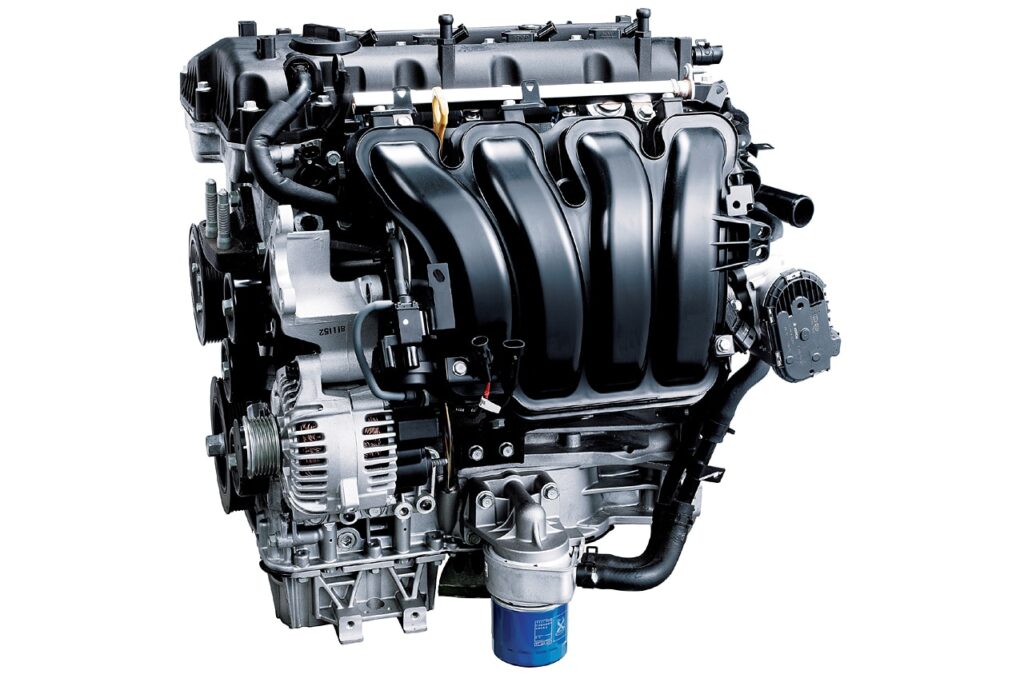

Quick Answer: What Is a Used Subaru Engine?
A used Subaru engine is an original factory horizontally-opposed “boxer” engine removed from a donor Subaru vehicle, typically one retired through an accident, insurance total loss, or high body mileage while the drivetrain remained sound, and listed for resale by an independent seller. It is matched to your vehicle using your VIN and engine code, since Subaru has used several distinct boxer engine families across the Legacy, Outback, Forester, Impreza, WRX, and BRZ lineups, including naturally aspirated and turbocharged variants. Inspection and testing practices vary by seller; ask for mileage, condition notes, and available test documentation before ordering. Used Subaru engines through Used Auto Parts Pro’s seller network typically run $600 to $3,800 depending on engine family, compared to $3,500 to $7,000 or more for a new engine from a Subaru dealer before labor.
Key Takeaways
- Subaru’s lineup includes the EJ25 (naturally aspirated and turbocharged EJ255/EJ257), the FB25 that replaced it, the FA20 (naturally aspirated in the BRZ/86, turbocharged in the WRX), the newer FA24 turbo, and the EZ36 flat-six. Confirm the exact engine code before ordering, since displacement, turbocharging, and generation all affect fitment.
- The EJ25 has a well-documented external head gasket leak history, particularly on SOHC production; ask sellers about gasket service history before ordering.
- Used Subaru engines are typically priced well below new OEM units; final pricing depends on engine family, mileage, and seller, with turbocharged WRX/STI engines commanding strong demand.
- VIN-based matching gives you strong fitment confidence, since your VIN encodes your exact engine type, commonly in the 8th character position.
- Inspection and testing practices vary by seller; ask what has been done to a specific listing before you buy.
- Many sellers offer warranty coverage on used engines; terms, duration, and what’s covered vary by seller and part.
- Shipping costs are included in the seller’s quote for engines shipped to the contiguous 48 states.
- Used Auto Parts Pro is a marketplace connector; sellers own the parts, set pricing and warranty terms, and ship directly to you.
Subaru Engine Families: What You Need to Know Before You Order
Subaru’s boxer engine layout is a defining feature across nearly its entire lineup, but the specific engine families and their known service considerations vary significantly, and unlike many competitors, several Subaru engines use a timing belt rather than a timing chain, which makes maintenance history especially important.
2.5L EJ25 (SOHC naturally aspirated)
Applications: Legacy, Outback, Forester, Impreza (roughly 1996 to 2011, varies by model). Typical price range: $600 to $1,600. Widely available due to a long production run. This engine has a well-documented history of external head gasket leaks, particularly on SOHC production; ask sellers whether the head gaskets have been replaced with a revised design and whether there’s documented coolant or oil leak history. It also uses a timing belt rather than a chain, and it’s an interference engine, so confirm belt service history as well.
2.5L EJ255/EJ257 (Turbocharged)
Applications: WRX (2002 to 2014), STI (2004 to 2021), Legacy GT and Outback XT (turbo variants). Typical price range: $1,500 to $3,500. A performance-oriented turbocharged engine with strong enthusiast demand, which keeps used pricing firm. Ringland failure is a documented risk under aggressive driving or aftermarket tuning, particularly on the EJ257; ask sellers whether the donor vehicle’s engine was tuned beyond factory specifications and what boost levels it was run at.
2.5L FB25
Applications: Legacy, Outback, Forester (2011 to present), Impreza and Crosstrek (2019 to present, revised FB25 variant). Typical price range: $700 to $1,800. A revised design that addressed many of the EJ25’s external head gasket concerns and switched to a timing chain, removing the belt-interval consideration. Generally regarded as more reliable than the EJ25 it replaced.
2.0L FA20 (naturally aspirated and turbocharged)
Applications: BRZ and Toyota 86/GR86 (2013 to present, naturally aspirated FA20D), WRX (2015 to 2021, turbocharged FA20F). Typical price range: $1,200 to $2,800 for the naturally aspirated version, $1,800 to $3,800 for the turbocharged version. Early FA20D production in the BRZ/86 (roughly 2013 to 2016) is associated with a documented oil consumption and piston ring concern that was the subject of an extended-warranty program from Subaru and Toyota; that program has likely expired for most affected vehicles given their age, but it’s worth asking sellers about oil consumption history regardless. The turbocharged FA20F shares the same ringland failure risk under aggressive tuning as the EJ257.
2.4L FA24 (Turbocharged)
Applications: Ascent (2019 to present), Outback XT and Legacy XT (2020 to present), WRX (2022 to present). Typical price range: $1,800 to $3,800. A newer turbocharged engine with more limited salvage supply and less long-term reliability data than Subaru’s older families. Confirm mileage and turbocharger condition directly with the seller.
3.0L/3.6L EZ30/EZ36 (Flat-Six)
Applications: Legacy and Outback (H6 trims, 2001 to 2009 for EZ30, 2010 to present for EZ36), Tribeca (2006 to 2014). Typical price range: $1,200 to $2,800. A naturally aspirated six-cylinder with a generally solid reliability record. Lower salvage supply than Subaru’s four-cylinder boxer engines, given its lower production volume, keeps pricing on the higher end.
Across every family, your VIN encodes your exact engine type, commonly in the 8th character position, which is a far more reliable starting point than trim name or displacement alone, especially since several Subaru models have shared a nameplate across both naturally aspirated and turbocharged engine options.
Benefits of Buying a Used Subaru Engine
Cost, without giving up factory compatibility
A used OEM Subaru engine is the exact engine your vehicle was built with; same mounting points, same wiring harness connectors, same accessory drive, at a fraction of new-engine dealer pricing.
Availability for performance and six-cylinder engines
Subaru’s turbocharged WRX/STI engines and six-cylinder applications can be expensive and sometimes backordered new. A used OEM unit from the salvage network is often the fastest and most cost-effective path to the exact engine your vehicle needs.
Real-world proof it runs
A used engine pulled from a donor vehicle has already demonstrated it operates, unlike a remanufactured short block with zero miles since rebuild.
Faster turnaround than backordered new parts
New-engine supply chains for older Subaru platforms and performance trims can stretch to weeks. A compatible used engine sourced through the seller network can often be found and shipped considerably faster.
Compatibility: Why Year and Model Alone Aren’t Enough
Subaru vehicles are frequently offered with more than one engine option within the same model, and the WRX in particular has used three distinct engine families across its history. The most common compatibility mistakes:
- Ordering a “WRX engine” without specifying EJ205/EJ207 (early generations, most common outside the US), EJ255/EJ257, or the newer FA20F/FA24, since these span different eras with different turbo systems and internal designs.
- Assuming all EJ25 engines are the same; SOHC naturally aspirated and turbocharged EJ255/EJ257 variants have significant internal differences and are not interchangeable without substantial modification.
- Ordering a BRZ or 86 engine without confirming production year, since early FA20D units have documented oil consumption considerations that later production addressed.
- Confirming whether a Legacy or Outback uses the four-cylinder EJ25/FB25 or the six-cylinder EZ30/EZ36, since both were offered depending on trim.
Providing your full 17-digit VIN when requesting a quote resolves most of this. Your VIN encodes your exact engine type, and the full VIN confirms generation, trim, and powertrain configuration. VIN-based matching gives you strong fitment confidence, though no used part can be promised as an absolute fit in every case; confirming the physical engine code stamped on the block against the listing is still worth doing before installation.
Common Problems That Lead to a Subaru Engine Replacement
- External head gasket leaks on EJ25 engines, particularly SOHC production, a well-documented issue that can range from a minor oil seep to a more significant coolant leak if left unaddressed.
- Ringland failure on turbocharged EJ257 and FA20F engines, generally associated with aggressive driving or aftermarket tuning beyond factory boost levels.
- Oil consumption on early FA20D engines in the BRZ and 86 (roughly 2013 to 2016), tied to piston ring design; addressed in later production.
- Timing belt failure on EJ-series engines, which use a belt rather than a chain and are interference engines, meaning a neglected belt can cause serious internal damage.
- Rod knock or bearing failure from extended oil-change neglect, which applies across all Subaru engine families and usually makes replacement more cost-effective than an in-vehicle rebuild.
- Accident damage, a cracked block or bent components from a collision, even when the rest of the vehicle is repairable.
If your Subaru is showing a check engine light with no unusual noise, smoke, or overheating, a full engine replacement may not be necessary. A proper diagnosis before ordering a replacement engine can save you from buying a part you don’t need.
Inspection and Quality Standards
Inspection and testing practices vary by seller and by engine. Where a seller does inspect or test an engine before listing it, that typically includes a compression check, a visual inspection for external damage or leaks, and a review of the donor vehicle’s mileage and history where available.
Before ordering, ask the seller:
- What is the mileage on the donor vehicle, and is there documentation?
- Was a compression test performed, and are the results available?
- Is there any visible evidence of oil or coolant contamination or leaks?
- For EJ25 engines: has the head gasket been replaced, and is there documented timing belt service history?
- For turbocharged EJ257 and FA20F engines: was the donor vehicle tuned beyond factory boost levels?
A seller who can answer these clearly is generally the safer choice.
Warranty Information
Warranty coverage on used Subaru engines varies by seller and by part. Many sellers in the Used Auto Parts Pro network offer warranty coverage, and terms, duration, exclusions, and return procedures are set individually by each seller, not by Used Auto Parts Pro. Coverage generally applies to the engine itself and does not include installation labor. Confirm all warranty terms in writing before your order ships.
Shipping Information
Shipping costs for used Subaru engines are included in the seller’s quoted price for the contiguous 48 states; there is no separate freight charge added at checkout. Most engines ship via LTL freight carrier within 24 to 72 hours of order confirmation and arrive within 2 to 5 business days, subject to carrier variance. Buyers in Alaska and Hawaii should confirm shipping terms directly with the seller, as additional freight arrangements may apply.
Buying Guide: How to Order the Right Subaru Engine
Step 1: Confirm your engine code. Check your VIN’s engine character, or look for the engine code stamped on the block itself.
Step 2: Submit your VIN when requesting a quote. This lets sellers cross-reference your exact build, including turbocharged versus naturally aspirated status, rather than guessing from year and model alone.
Step 3: Compare quotes from multiple sellers. Look at donor mileage, condition notes, warranty terms, and total price with shipping included.
Step 4: Ask about testing and documentation. Request whatever inspection or test information the seller has available for the specific unit, including head gasket and timing belt history for EJ25 engines and tuning history for turbocharged units.
Step 5: Confirm installation requirements. Some Subaru engine swaps require ECU matching or immobilizer relearning; confirm your installer is equipped for this before the engine ships.
Installation Considerations
Subaru engine installation complexity varies by platform and engine family. A few points worth planning for:
- Many Subaru models use an immobilizer system tied to the ECU and key. If you’re also replacing the ECU along with the engine, confirm with your installer whether relearning is needed for your specific application.
- For EJ25 swaps, plan to replace the timing belt, tensioner, and water pump during installation if the donor engine’s service history isn’t documented, since these are due-for-service items on any used interference engine of unknown history.
- For turbocharged swaps (EJ257, FA20F), confirm the turbocharger and related boost control components are included and undamaged, since these are sometimes listed separately from the long block.
- Transfer accessories (alternator, power steering pump, intake components) from your original engine where the replacement doesn’t include them, and confirm compatibility before reusing.
- Replace timing components, water pump, and related wear items during installation if the donor engine’s maintenance history on these components isn’t documented.
Why Choose Used Auto Parts Pro
- Verified seller network: sellers in the network are verified; inspection and testing practices vary by seller and part, so ask for details before you buy.
- VIN-based matching: submit your VIN for the strongest available fitment confidence across Subaru’s overlapping naturally aspirated and turbocharged boxer options.
- Nationwide reach: your request goes to sellers across the country, not just a single local yard.
- Transparent pricing: shipping is included in the seller’s quoted price.
- Seller-backed warranties: many sellers offer warranty coverage; terms vary by seller and part.
- Subaru-specific know-how: our team understands the EJ25 head gasket history, ringland failure risk on tuned turbocharged engines, and timing belt versus chain differences that make Subaru sourcing different from other brands.
| Factor | Used OEM | Remanufactured | New OEM |
|---|---|---|---|
| Cost | Lowest | Moderate | Highest |
| Origin | Original Kia factory engine | Rebuilt to spec, new wear parts | New from Kia |
| Warranty | Varies by seller | Often 1 to 2 years | Full manufacturer warranty (or recall-based coverage for eligible Theta II engines) |
| Availability | Depends on donor supply by engine code | Available for common engine codes | Always available, but costly for V6 and turbo trims |
| Best for | Budget-conscious repairs, older vehicles | Long-term keepers wanting fresher internals | Newer vehicles, warranty-sensitive owners, or Theta II owners with active recall coverage |
Frequently Asked Questions
Check your VIN's engine character, commonly the 8th position, or look for the code stamped directly on the engine block. The engine code, not just the trim name, is what determines compatibility for Subaru applications.
The EJ25 SOHC typically runs $600 to $1,600. The FB25 runs $700 to $1,800. The FA20D naturally aspirated runs $1,200 to $2,800. The EZ30/EZ36 runs $1,200 to $2,800. The EJ255/EJ257 turbo runs $1,500 to $3,500, and the FA20F/FA24 turbo runs $1,800 to $3,800. These are estimates; final pricing depends on seller, mileage, and condition
Many SOHC EJ25 engines, particularly older production, are associated with a well-documented external head gasket leak history. Ask the seller whether the gaskets have been replaced with a revised design and whether there's any documented coolant or oil leak history.
Ringland failure is primarily associated with aggressive driving or aftermarket tuning beyond factory boost levels on the EJ257 and FA20F. A stock, well-maintained turbocharged Subaru engine is much less likely to experience this issue. Ask the seller whether the donor vehicle's engine was tuned or modified.
Early FA20D production (roughly 2013 to 2016) in the BRZ and Toyota 86 was associated with a documented oil consumption concern tied to piston ring design, which was the subject of an extended-warranty program from Subaru and Toyota. Given the age of these vehicles, that program has likely expired for most owners, but confirming oil consumption history on any early-production donor engine is still worthwhile.
: Warranty coverage varies by seller and by part. Many sellers in the network offer coverage on used engines, but terms and duration are set individually. Confirm all terms in writing before your order ships.
Most engines ship via LTL freight within 24 to 72 hours of order confirmation and arrive within 2 to 5 business days for most US locations, subject to carrier variance. Shipping costs are included in the seller's quote
The EJ25 is Subaru's older 2.5L boxer engine, used through roughly 2011 and known for its external head gasket leak history and timing belt maintenance requirement. The FB25 replaced it with a revised design that addressed many of those gasket concerns and switched to a timing chain. The two are not interchangeable without significant modification.
Lower mileage is generally preferable, but documented maintenance history matters as much as the odometer reading. For EJ25 engines specifically, head gasket and timing belt service history matter more than mileage alone. Ask the seller for whatever donor vehicle history is available.
Yes, in most cases. Sellers in the network carry engines for older Subaru models including early Legacy, Impreza, and Forester generations, though availability may be more limited than for current-generation vehicles. Contact us if the search tool doesn't surface results for an older model.
No. The WRX has used the EJ205/EJ207 (early generations), the EJ255/EJ257, and the newer FA20F and FA24 turbocharged engines depending on generation, and none of these are interchangeable with each other without significant modification. Always confirm engine code rather than assuming based on generation or trim badge alone.
Confirm the engine code on the block matches your VIN's engine character. Check the oil fill cap and dipstick for milky residue, which can indicate coolant contamination in the donor engine's history, especially relevant for EJ25 engines with documented head gasket history. For turbocharged units, ask about tuning history. Ask the seller for mileage documentation and any available compression test results.
It depends on the failure. A minor issue like a valve cover gasket leak is worth repairing. Rod knock, a cracked block, or advanced head gasket damage on an EJ25 typically make replacement the more economical path. A qualified mechanic's diagnosis is the best way to decide.
Contact the seller directly. Return and exchange policies are set at the seller level, so review those terms before ordering. Providing your VIN at the time of the original quote request is the best way to avoid a mismatch in the first place.
Conclusion
A failed engine doesn’t have to mean the end of the road for a Subaru that’s otherwise solid, and it definitely doesn’t have to mean paying full dealer price for a new boxer engine. The used engine market for Subaru is active precisely because these vehicles hold real value in the drivetrain even after the rest of the vehicle is done, which means a properly matched used engine is a genuinely sound repair, not a compromise.
The keys are straightforward: confirm your exact engine code and generation from your VIN, ask sellers what testing and documentation they can provide, and get warranty terms in writing before you buy. Used Auto Parts Pro connects you with verified sellers across the country so you can compare real quotes and find the right engine for your specific Subaru.
We hold a huge stock of Kia parts for years. You can explore other used Kia parts mentioned below:
We hold a huge stock of Used car parts for years. You can explore other used parts mentioned below:
- Used GMC Engine
- Used International Harvestot Engine
- Used Hummer Engine
- Used Hyundai Engine
- Used Infiniti Engine
- Used Isuzu Engine
- Used Jaguar Engine
- Used Jeep Engine
- Used Kia Engine
- Used Land Rover Engine
- Used Licoln Engine
- Used Maserati Engine
- Used Oldsmobile Engine
- Used Peugot Engine
- Used Plymouth Engine
- Used Pontiac Engine
- Used Renault Engine
- Used Saab Engine
- Used Saturn Engine
- Used Scion Engine
- Used Suzuki Engine
- Used Tesla Engine
- Used Triumph Engine
- Used Volkswagen Engine
- Used Volvo Engine
- Used Toyota Engine
- Used BMW engine
- Used Porsche Engine
- Used Chevy Engine
- Used lexus Engine
- Used Nissan Engine
- Used Cadillac Engine
- Used Engine in New York
- Used Engine in Rhode Island
- Used Engine in Oregon
- Used Engine in Ohio
- Used Engine in South Carolina
- Used Engine in Minnesota
- Used Engine in Michigan
- Used Engine in Delaware
- Used Engine in California
- Used Engine in Arizona
- Used Engine in New Mexico
- Used Engine in New Jersey
- Used Engine in New Hampshire
- Used Engine in Alabama
- Used Engine in Mississippi
- Used Engine in South Dakota
- Used Engine in Aouth Dakota
- Used Engine in South Mnaine
- Used Engine in South Texas
- Used Engine in South Wyoming
- Used Engine in Vermont
- Used Engine in North Carolina
- Used Engine in North Dakota
- Used Engine in Oklahoma
- Used Engine in Pennsylvania
- Used Engine in Tennessee
- Used Engine in Texas
- Used Engine in Utah
- Used Engine in Iowa
- Used Engine in Wyoming
- Used Engine in Wisconsin
- Used Engine in Virginia
- Used Engine in Idaho
- Used Engine in Washington
- Used Engine in DC
- Used Engine in West Virginia
- Used Engine in Indiana
- Used Engine in Kansas
- Used Engine in Kentucky
- Used Engine in Louisiana
- Used Engine in Maine
- Used Engine in Maryland