Used Car Engine in California
A failed engine is an expensive problem anywhere, but California adds a wrinkle most other states don’t have: strict rules about what engine you’re legally allowed to put in your car. Between the cost of the repair itself and the risk of buying an engine that won’t pass a required inspection, a lot of California drivers end up more confused after their first round of research, not less.
- Used OEM Engines CA-Compliant Available
- Avoid Dealer Pricing & Inspection Gambling
- Matched by VIN for Exact Fitment
- Same-Year-or-Newer CARB Rule Met
- Shipping Included in the Quote
- Seller-Backed Warranty Available
FIND YOUR PART NOW!
CONGRATS !
You're Almost Done
A new engine from a dealer is rarely realistic. Depending on the vehicle, dealer-installed new or remanufactured engines commonly start around $4,000 to $6,000 for a four-cylinder and climb well past $8,000 for a V8 or a hybrid drivetrain component, all before labor. For most California owners, a used engine pulled from a comparable donor vehicle is the more practical route: the same factory design, at a fraction of the cost, as long as it meets the state’s emissions requirements for the swap.
That last part matters more in California than almost anywhere else. The state’s Bureau of Automotive Repair (BAR) requires that a replacement engine be certified to the same model year or newer than the vehicle receiving it, with all original emissions equipment intact, and most engine changes must pass inspection at an official BAR Referee station before the car can be registered or pass a smog check. Buying the wrong engine, even a mechanically sound one, can leave you with a car you can’t legally drive.
Used Auto Parts Pro is a marketplace, not a parts warehouse. We do not hold engine inventory and we do not sell engines directly. We connect you with a nationwide network of verified sellers, match listings to your vehicle using your VIN, and let you compare quotes, so you can find an engine that fits your car and California’s rules without guessing.
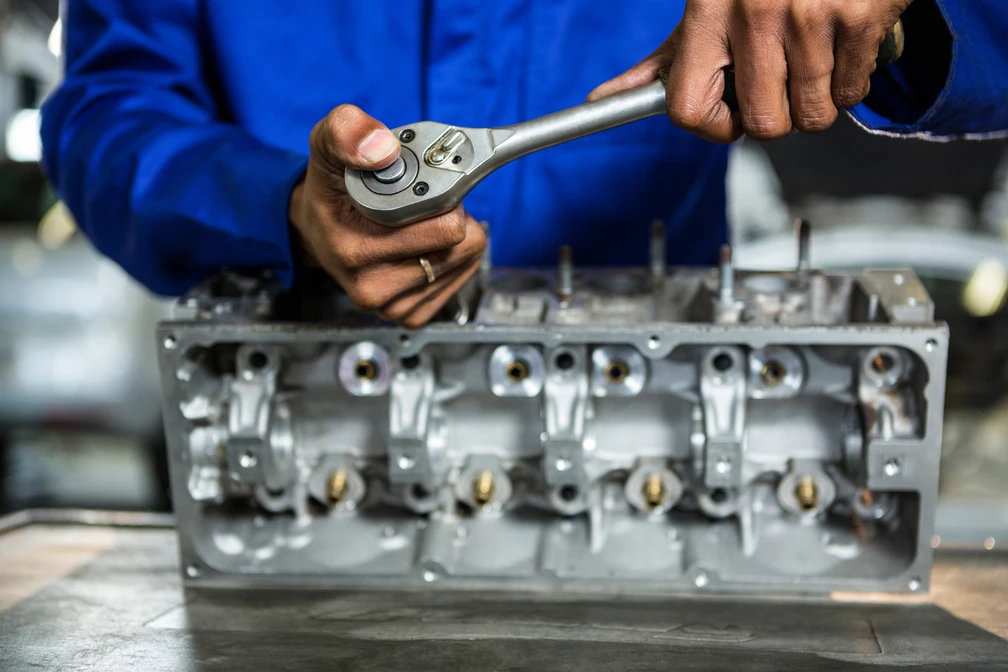
The price of a new automobile engine is exorbitant. You risk a lot and put yourself in a very tight grip with a new one but gives zero returns on investment as no vehicle maintence services are offered. Luckily, even with less budget, a vehicle can keep posturing itself with high value maintained by a used engine that comes with a guarantee. Also, buying a used car engine in California contributes to environmental protection by lessening waste and the need for new materials.
No one has to worry about whether they need to be in Los Angeles or San Diego, or even Sacramento, because our team takes pride in offering the best assistance effortlessly and assuredly.
We offer the following:
- Used car engine in California with rigorous quality checks
- Support for all popular vehicle brands and models
- Helpful support throughout the whole process
If you are looking for an economical used car engine in California, then you have come to the right spot.
The price of a new automobile engine is exorbitant. You risk a lot and put yourself in a very tight grip with a new one but gives zero returns on investment as no vehicle maintence services are offered. Luckily, even with less budget, a vehicle can keep posturing itself with high value maintained by a used engine that comes with a guarantee. Also, buying a used car engine in California contributes to environmental protection by lessening waste and the need for new materials.
No one has to worry about whether they need to be in Los Angeles or San Diego, or even Sacramento, because our team takes pride in offering the best assistance effortlessly and assuredly.
We offer the following:
- Used car engine in California with rigorous quality checks
- Support for all popular vehicle brands and models
- Helpful support throughout the whole process
If you are looking for an economical used car engine in California, then you have come to the right spot.
4. Quick Answer
What is a used car engine? It is a factory engine removed from a donor vehicle, most often after an accident or a total loss rather than an engine failure, and resold through independent sellers rather than built new.
How much does a used car engine cost in California? Pricing depends heavily on the vehicle. A used four-cylinder sedan engine commonly runs $600 to $1,800; a V6 crossover or SUV engine typically runs $900 to $2,400; a V8 truck or SUV engine typically runs $1,200 to $3,500. New or remanufactured replacements generally start around $4,000 and climb well past $8,000 before labor.
Why does California require anything extra? California’s BAR Referee program requires replacement engines to meet the vehicle’s original or a newer emissions certification standard, with the original emissions equipment intact. Most engine changes need a Referee inspection before the vehicle can pass smog check or be re-registered.
How does Used Auto Parts Pro help? UAPP matches your VIN to compatible used engine listings across its seller network so you can compare quotes side by side. We do not inspect, test, warehouse, or ship engines ourselves; those steps are handled by the individual seller, and terms vary from one seller to the next.
5. Key Takeaways
- California requires a replacement engine to be certified to the same model year or newer than the vehicle it’s going into, with original emissions equipment intact; most swaps need a BAR Referee inspection before the car can pass smog check or be re-registered.
- Typical used engine pricing ranges from around $600 for a smaller four-cylinder up to $3,500 for a V8 truck or SUV engine; new or remanufactured pricing generally starts around $4,000 and climbs from there before labor.
- A VIN match gives strong fitment confidence, but it is not an absolute guarantee. Confirm the physical engine code and emissions certification against the listing before you buy.
- Warranty terms are set by the individual seller, not by UAPP, and vary by seller and by part. Get warranty terms in writing before purchase.
- Inspection and testing practices vary by seller. Ask directly rather than assuming every listing was tested the same way.
- Shipping cost is included in the seller’s quoted price; it is not a separate line item and it is not advertised as free.
- UAPP is a marketplace. We connect buyers to independent sellers across California and nationwide; we do not hold inventory and do not sell engines directly.
6. Why California Drivers Choose Used Engines
What makes used engines a common choice in California specifically? Three things line up here more than in a lot of other states: an enormous used vehicle market, a wide range of climates that affect engine condition differently by region, and repair costs that run higher than the national average in most California metro areas.
- Market size. California has more registered vehicles than any other state, which means a larger pool of donor vehicles and more used engine listings to compare at any given time.
- Climate variation by region. Inland and desert areas (Central Valley, Inland Empire, the desert Southeast) see less road salt and less rust-related engine damage, while coastal cities (the Bay Area, San Diego, parts of Los Angeles) deal with salt air that can accelerate corrosion on exposed components. Where a donor vehicle spent its life matters more in California than the state’s reputation for dry weather alone suggests.
- Commute-driven wear patterns. Long highway commutes in areas like the Inland Empire, Central Valley, and outer Bay Area suburbs tend to be easier on an engine than the stop-and-go traffic common in Los Angeles and the urban Bay Area. Mileage alone doesn’t tell the whole story; how the vehicle was driven matters too.
- Repair cost pressure. Labor rates in major California metros run above the national average, which makes the cost gap between a used engine and a new or remanufactured one even more significant here than in lower-cost-of-living states.
7. California Engine Swap Compliance: What the BAR Referee Program Requires
What is the BAR Referee program? California’s Bureau of Automotive Repair (BAR) requires that emission-controlled vehicles with a changed engine be inspected and certified by an official Referee station before the vehicle can pass a smog check or be registered. Standard smog check shops cannot perform this certification; only a designated Referee station can.
What are the core rules for a legal engine swap in California?
- Model year rule. The replacement engine must be certified to the same model year or a newer model year than the vehicle receiving it. An older engine, even from the same model line, generally does not meet this standard because it was certified to a weaker emissions standard.
- Vehicle type matching. The engine must come from the same general vehicle type as the one receiving it (for example, a passenger car engine into a passenger car, not a heavy-duty truck engine into a light passenger vehicle).
- No JDM or federal-only (49-state) engines. An engine that was never certified for sale in the U.S., or that was only certified for the other 49 states rather than California, will not be certified by a BAR Referee, even if it is mechanically similar to the correct engine.
- Emissions equipment must transfer intact. The catalytic converter, oxygen sensors, EGR valve, PCV system, EVAP components, and (for 1996 and newer vehicles) a fully functioning OBD-II system with matching factory calibrations all need to come across with the swap or already be present and functional on the vehicle.
- Referee inspection and DMV notification. Most engine changes require scheduling an appointment with a BAR Referee station, which inspects the emissions components, checks the OBD-II system, and performs a tailpipe test. A passed inspection results in a Referee certification label. Owners are also generally expected to notify the DMV and be ready to document the donor engine’s origin, including its VIN.
What happens if a swap doesn’t comply? A non-compliant vehicle cannot pass smog check or be registered, and emissions tampering violations can carry civil penalties. Practically speaking, that means a technically excellent used engine that doesn’t meet California’s certification requirements can leave you with a car you cannot legally drive, regardless of how well it runs.
How does this affect what you should buy? Confirm the donor vehicle’s model year and emissions certification before you purchase, not after. If you’re unsure whether a specific engine and vehicle combination will pass Referee inspection, California’s BAR Referee program is the authoritative source to check before you commit to a purchase; this page is general guidance, not a substitute for confirming your specific situation with them.
8. Popular Vehicles and Engine Types in Demand in California
What kinds of used engines are most requested in California? Given the state’s vehicle mix, demand tends to concentrate around a handful of high-volume categories:
- Compact and midsize sedans: Toyota Camry and Corolla, Honda Civic and Accord, and Nissan Altima engines are consistently in demand given how common these vehicles are on California roads.
- Full-size pickups: Ford F-150, Chevrolet Silverado, and Ram 1500 engines see steady demand from both personal-use trucks and commercial/fleet vehicles.
- Crossovers and SUVs: Honda CR-V, Toyota RAV4, and similar crossover engines are common requests given how much of California’s new vehicle mix over the last decade has shifted toward this category.
- Hybrid drivetrains: California has one of the highest hybrid and plug-in hybrid adoption rates in the country, so requests for hybrid-specific engines and related drivetrain components (which are not interchangeable with a standard combustion engine from the same model) are more common here than in most other states.
9. Compatibility: What Actually Determines Fitment in California
Does VIN matching guarantee an engine will work in my car? No. VIN matching gives strong fitment confidence by identifying your vehicle’s original engine code, model year, and platform, but it is not an absolute guarantee of fit or of California legal compliance. Always confirm the physical engine code on the listing against your VIN, and separately confirm the engine’s emissions certification meets the BAR Referee requirements described above.
Common buyer mistakes worth avoiding in California specifically:
- Assuming any engine of the correct displacement and model will work, without checking whether it’s certified to the same model year or newer.
- Buying a JDM or grey-market engine because it’s cheaper, without realizing it cannot be certified by a BAR Referee regardless of mechanical condition.
- Assuming a truck engine will work in a passenger car of a similar era, when vehicle-type classification also matters for certification.
- Not confirming that emissions equipment (catalytic converter, EGR valve, EVAP components, OBD-II calibration) will transfer with the engine or is already present and functional on the receiving vehicle.
10. Common Problems Seen in California Driving Conditions
What commonly leads California drivers to search for a used engine? A mix of ordinary wear and California-specific driving patterns:
Overheating from stop-and-go traffic. Extended idle time in Los Angeles, the Bay Area, and other congested metro corridors puts more heat-cycle stress on an engine than steady highway driving, which can accelerate wear on cooling system components and, over time, the engine itself.
Coastal corrosion on exposed components. In coastal cities, salt air can accelerate corrosion on exposed engine components and connectors even without road salt, which is worth asking about if a donor vehicle spent its life near the coast.
High-mileage commuter wear. Long commutes from areas like the Inland Empire, the Central Valley, and outer Bay Area suburbs into major job centers rack up highway miles quickly. Highway miles are generally easier on an engine than city miles, but very high total mileage still warrants a closer look at maintenance history regardless of how the miles were driven.
A check engine light or a rough idle alone doesn’t necessarily mean an engine needs replacement. A proper diagnostic is worth the time before committing to a used engine purchase.
11. Inspection and Quality Standards
Are used engines tested before they’re sold in California? Inspection and testing practices vary by seller and by engine; there is no single standard applied to every listing in the UAPP network. Ask each seller directly:
- Is documented mileage available, and does it come from the donor vehicle’s title, dashboard photo, or a CARFAX-style record?
- Was a compression test performed, and can the results be shared in writing?
- Is there a run video or cold-start video available?
- Is the emissions equipment (catalytic converter, sensors, EGR, EVAP components) present, intact, and included with the engine?
- What is the engine’s certified model year, and does the seller know whether it will meet California’s same-year-or-newer requirement for your vehicle?
12. Warranty Information
Do used engines sold through the UAPP network come with a warranty? Warranty coverage is not standardized across the marketplace. It varies by seller and by part, and is set individually by each seller rather than by UAPP. Some sellers offer 30-day, 60-day, or longer warranties on the engine itself; others sell as-is. Warranties typically cover the engine assembly and usually exclude labor, consumables, and damage from improper installation or a failed emissions certification. Always get warranty terms in writing before purchase, and confirm whether the warranty covers a scenario where the engine doesn’t pass BAR Referee inspection.
13. Shipping Information
How does shipping work for a used engine in California? Shipping cost is included in the seller’s quoted price; it is not billed separately and it is not offered as a free add-on. Most engines ship via LTL freight on a pallet. Delivery timelines to major California hubs, including the Los Angeles metro, the San Francisco Bay Area, San Diego, Sacramento, and Fresno, are typically among the faster routes nationally given how many sellers serve California directly, generally within 3 to 7 business days. More remote areas of the state, including the far North Coast and the Eastern Sierra, may take longer. Ask your seller for a specific timeline before committing to a quote.
14. Buying Guide
How do I buy a used car engine the right way in California?
- Confirm your vehicle’s engine code and model year. Check your VIN’s 8th character and your vehicle’s build sheet.
- Check California’s certification requirement before you shop. Confirm you need an engine certified to the same model year or newer, with matching vehicle-type classification, so you don’t buy something a BAR Referee will reject.
- Submit your VIN through UAPP. This lets sellers in the network match listings to your specific vehicle.
- Compare quotes, not just price. Look at mileage, documentation, emissions equipment included, and warranty terms side by side.
- Ask about testing and emissions equipment. Request compression numbers, run video, or mileage verification, and confirm the catalytic converter, sensors, and OBD-II system status directly from the seller.
- Plan for the Referee inspection. Budget time and, if required, a fee for BAR Referee certification before you can register the vehicle or pass smog check.
- Get everything in writing. Price, warranty terms, what is included, and estimated shipping timeline should all be confirmed in writing before you pay.
15. Installation Considerations
- PCM and immobilizer compatibility. Depending on the vehicle, the PCM may need to be matched or reprogrammed to the replacement engine, particularly if the donor engine came from a different model year.
- Emissions equipment integrity. Never install a used engine with missing, deleted, or bypassed emissions equipment for on-road use in California; doing so is illegal and will not pass BAR Referee inspection or smog check.
- BAR Referee scheduling. Plan to schedule a Referee appointment as part of your installation timeline, not as an afterthought, since most engine changes require it before the vehicle can be legally driven and registered.
- Accessory transfer. Alternators, power steering pumps, and AC compressors are often transferred from your original engine rather than included with the used long block. Confirm what the listing includes before assuming a plug-and-play swap.
- Wear-item replacement. Given the labor already involved in an engine swap, most shops recommend replacing gaskets and fluids at the same time rather than reusing worn parts.
16. Why Choose Used Auto Parts Pro
- Verified seller network. UAPP works with vetted sellers across California and nationwide rather than an anonymous listing board.
- VIN-based matching. Submitting your VIN gives you strong fitment confidence for your specific make and model.
- Statewide and nationwide reach. More sellers in the network means more chances to find a well-documented engine that also meets California’s certification requirements.
- Transparent, quote-based pricing. Shipping cost is included in your seller’s quote, with no separate freight surprise later.
- OEM-first, with transparency on alternatives. UAPP prioritizes OEM used engines, and where a seller lists a remanufactured or non-OEM-component unit, that distinction is disclosed so you can choose what fits your budget and California’s compliance requirements.
- Marketplace transparency. UAPP does not hold inventory and does not sell engines directly; we connect you to sellers and let you compare their terms.
| Factor | Used (Seller Network) | Remanufactured | New |
|---|---|---|---|
| Typical price (4-cyl) | $600 to $1,800 | $2,200 to $3,800 | $4,000 to $6,000+ |
| Typical price (V6) | $900 to $2,400 | $2,800 to $4,500 | $5,000 to $7,000+ |
| Typical price (V8) | $1,200 to $3,500 | $3,500 to $5,500 | $6,000 to $9,000+ |
| Components | Original factory parts | Mix of OEM and aftermarket internals | All new components |
| California certification | Depends on donor vehicle's model year; confirm before buying | Often built to a specific certification standard; confirm with the rebuilder | Meets current standards by default |
| Best for | Budget-conscious buyers wanting OEM parts who confirm certification themselves | Buyers wanting fresher internals with a documented certification standard | Buyers wanting the least compliance research, at the highest cost |
Frequently Asked Questions
Pricing depends on the vehicle. A four-cylinder engine typically runs $600 to $1,800, a V6 runs $900 to $2,400, and a V8 runs $1,200 to $3,500. New or remanufactured replacements generally start around $4,000 before labor.
Most engine changes on emission-controlled vehicles require inspection and certification by an official BAR Referee station before the vehicle can pass a standard smog check or be re-registered.
A BAR Referee station is an official California Bureau of Automotive Repair facility authorized to inspect and certify engine changes. Standard smog check shops cannot perform this certification.
Generally no. California requires a replacement engine to be certified to the same model year or newer than the vehicle receiving it, since an older engine was certified to a weaker emissions standard.
No. Engines that were never certified for U.S. sale, including most JDM imports, will not be certified by a BAR Referee regardless of mechanical condition.
Generally no. California's certification rules require the replacement engine to match the general vehicle-type classification of the vehicle receiving it.
Generally no. California's certification rules require the replacement engine to match the general vehicle-type classification of the vehicle receiving it.
The vehicle cannot pass smog check or be legally registered until it meets certification requirements, and emissions tampering can carry separate civil penalties.
The vehicle cannot pass smog check or be legally registered until it meets certification requirements, and emissions tampering can carry separate civil penalties.
No. UAPP is a marketplace that connects buyers with independent, verified sellers. We do not hold engine inventory and do not sell engines directly; each transaction and its terms are handled by the seller.
No. UAPP is a marketplace that connects buyers with independent, verified sellers. We do not hold engine inventory and do not sell engines directly; each transaction and its terms are handled by the seller.
No. UAPP is a marketplace that connects buyers with independent, verified sellers. We do not hold engine inventory and do not sell engines directly; each transaction and its terms are handled by the seller.
Shipping cost is built into the seller's quoted price. It is not billed as a separate line item, and it is not advertised as free since the cost is already factored into the quote.
Major hubs like Los Angeles, the Bay Area, San Diego, Sacramento, and Fresno typically see delivery within 3 to 7 business days; more remote parts of the state may take longer. Ask your seller for a specific estimate.
Testing and inspection practices vary by seller. Ask directly whether a compression test, mileage documentation, or run video is available before purchasing.
Conclusion
A failed engine doesn’t have to mean paying dealer prices, and it doesn’t have to mean gambling on whether your replacement will pass inspection either. Once you know your vehicle’s model year and California’s same-year-or-newer certification requirement, a used engine matched to your VIN through a vetted seller network is usually the most practical way to get back on the road, legally, without paying new or remanufactured pricing. Used Auto Parts Pro connects you with verified sellers across California and nationwide, matches listings to your vehicle, and lets you compare quotes, warranty terms, and documentation side by side so you can make the call with real information in front of you. When you’re ready, submit your VIN to start comparing quotes from sellers who already understand California’s requirements.