Table of Contents
Stop Paying Dealer Prices, There's a Smarter Way
The Jaguar Parts Premium Is Real, But It’s Not Unavoidable
Owning a Jaguar is one thing. Maintaining one is something else entirely. The moment anything goes wrong, a suspension component, a cooling system part, an electronics module, you’re suddenly aware of just how expensive the premium badge can be when parts need replacing. Dealer quotes that seem almost aggressive. Independent shop pricing that’s only slightly more forgiving. And a general sense that being a Jaguar owner means accepting that repairs will cost more than they would on a Toyota or a Honda.
Some of that is true. But a lot of it isn’t, and the part that isn’t true is exactly where smart owners save real money. The rise of reputable used Jaguar parts online marketplaces has genuinely changed the math for Jaguar ownership. A growing number of owners, people who actually know their cars inside and out and refuse to hand a blank check to a dealership parts counter, are sourcing quality used Jaguar car parts online, cutting their repair costs significantly, and getting results that hold up just as well as anything from a dealer. The tools available to buyers today, part number lookups, VIN-matched fitment databases, supplier reviews, and tested-and-graded used inventory, have made it easier than ever to buy with confidence.
This guide is written for those owners, and for anyone thinking about becoming one. We’re going to cover what used Jaguar parts online actually means in practice, which parts make sense to buy used versus new, where the real savings come from, what to watch out for, and how to make sure what you’re ordering actually fits your specific car.
Why Used Parts Make More Sense for Jaguars Than for Most Other Cars
The Economics Are Different When You’re Starting From a Higher Price Point
RepairPal estimates that Jaguar owners spend around $1,123 per year on average for repair and maintenance, well above what most mainstream vehicle owners pay. That number is an average, which means some years it’s lower, and other years a single repair eats the whole budget and then some. An alternator replacement on a Jaguar XE, for example, is usually between $400 and $900 in OEM parts alone before labor enters the picture.
When you’re starting from those kinds of numbers, the savings from sourcing quality used Jaguar car parts aren’t marginal; they’re substantial. A used OEM alternator in good, tested condition from a reputable used Jaguar parts supplier might run $200 to $350. That’s the same part, pulled from a low-mileage car, with a warranty attached. The difference between that and dealer pricing is the kind of money that makes a real difference in how much Jaguar ownership actually costs over five or ten years.
Jaguars Hold Their Parts Quality Well
One of the things that makes used Jaguar auto parts particularly worth considering is how well Jaguar components hold up when they haven’t failed. A door mirror assembly, a suspension arm, a headlight unit, or an interior trim piece from a well-maintained Jaguar that was totaled in a collision is, in many cases, indistinguishable in condition from a brand-new equivalent. The car was expensive when it was built. The quality of the components reflects that. When you’re shopping for used Jaguar car parts, you’re often getting parts built to a higher specification than equivalent aftermarket alternatives; that’s a genuine advantage that comes with the Jaguar nameplate even in the used market.
This is less true for wear items, brake pads, belts, and filters, where the condition is directly tied to use. But for structural components, body parts, electronics modules that came from a car that ran perfectly until it didn’t, and mechanical assemblies from low-mileage donors, the case for used Jaguar parts online is genuinely strong. The key, as with any used part, is sourcing from suppliers who test what they sell, describe it honestly, and back it with a real return policy.
What the Dealer Doesn’t Tell You About OEM Parts
Here’s something worth understanding about how Jaguar parts pricing actually works. When you buy a part from a Jaguar dealership, you’re not just paying for the component; you’re paying for the entire supply chain that sits between the manufacturer and the parts counter. Brand packaging, distribution margins, dealer markup, and the convenience of having inventory sitting on a shelf all build into the final price.
A used Jaguar OEM parts purchase from a quality supplier is often the same component, manufactured to the same specification, by the same supplier, meeting the same engineering tolerances, minus all of that additional markup. That’s why experienced Jaguar mechanics and dedicated owners have been sourcing used Jaguar parts online for years. It’s not about cutting corners. It’s about understanding that paying three times the fair price for a part doesn’t make the part better.
Which Jaguar Parts Are Smart Buys Used, and Which Ones to Think Twice About
The Parts Where Used Make Perfect Sense
Not every used Jaguar car parts purchase carries the same risk profile. Some components are excellent candidates for buying used because their condition is either visually obvious, testable before installation, or largely unaffected by age when they’ve been stored properly. Others are smarter to buy new because their failure mode is gradual and not easily detected without specialized equipment.
Here’s how to think about it in practice. Body panels, bumper covers, door skins, hoods, and trunk lids are straightforward; you can see exactly what you’re getting. If the panel is straight and the paint and surface condition match your needs, it’s as good as new for your application. Interior trim, door cards, center consoles, seats, and dashboard components all fall into the same category. What you see is what you get, and a good quality used Jaguar spare parts supplier will photograph and describe these accurately.
Mechanical assemblies, alternators, power steering racks, brake calipers, water pumps, engine mounts, gearbox components, are excellent used purchases when they come from low-mileage donors and are sold by used Jaguar parts suppliers who test and warrant what they ship. Suspension components, including control arms, subframes, and knuckles, are similarly well-suited to buying used, provided the supplier can confirm condition, and there’s no visible damage or corrosion.
Electronics modules, ECUs, BCMs, window regulators, HVAC control units, and comfort system controllers are a major category for used Jaguar parts online buyers because the dealer pricing on these can be brutal. A BCM from a Jaguar dealer might run $800 to $1,400 with programming. The same unit from a reputable used Jaguar OEM parts supplier, verified as working, often lands between $150 and $400. That’s a gap worth closing.
Parts You Should Generally Buy New
Being honest about this matters. Timing chains and timing system components, gaskets and seals, wheel bearings, brake pads and rotors, fuel system components including injectors and fuel pumps on high-mileage applications, belts, and turbocharger seals are all areas where used risk usually isn’t worth the savings. These are either safety-critical, have failure modes that don’t show until they’re under load, or have a service life that resets the economics in favor of new.
The sweet spot for used Jaguar auto parts shopping is components where condition is verifiable, service life remaining is meaningful, and dealer pricing is genuinely painful. That’s a large and valuable category, but it just isn’t everything.
Real Cost Comparison: Used vs. New OEM Jaguar Parts
The table below gives you a realistic picture of what used Jaguar spare parts can save compared to new OEM dealer pricing across common repair categories.
Part / Component | New OEM (Dealer) | Used OEM (Online) | Typical Savings |
Alternator (XE / XF) | $1,100 – $1,600 | $200 – $380 | Up to 75% off dealer price |
Air Suspension Compressor | $800 – $1,200 | $180 – $350 | 60–75% savings |
Front Headlight Assembly | $900 – $1,500 | $200 – $450 | Up to 70% savings |
Power Steering Rack | $700 – $1,100 | $150 – $320 | 55–75% savings |
BCM / Body Control Module | $800 – $1,400 | $150 – $400 | 60–80% savings |
Door Mirror Assembly | $400 – $800 | $80 – $200 | Up to 75% savings |
Rear Bumper Cover | $500 – $900 | $100 – $250 | 65–75% savings |
Transmission (reconditioned) | $3,500 – $6,000 | $800 – $1,800 | 50–70% savings |
These figures are representative ranges; your exact savings will vary based on model year, trim level, and the specific supplier you choose. But the pattern is consistent: quality used jaguar parts online deliver real, significant savings across virtually every major repair category.
How to Shop Used Jaguar Parts Online Without Getting Burned
The difference between a good used parts purchase and a frustrating one usually comes down to three things: the quality of the supplier, the specificity of the part description, and how much verification you do before you order. This isn’t complicated, but it does require more attention than buying from a dealer’s parts counter, where the fitment is guaranteed, and returns are easy.
Start with your part number. Jaguar parts fitment is year, model, and VIN-specific more often than people expect. The same part name across two model years of the same car can be a different physical unit with different connectors or mounting points. Before you search for used Jaguar parts online, find the OEM part number for what you need. Your Jaguar’s VIN will get you there via the Jaguar Genuine Parts catalogue, an independent parts database, or a dealer parts inquiry. Once you have that number, you’re shopping for something specific rather than something approximate.
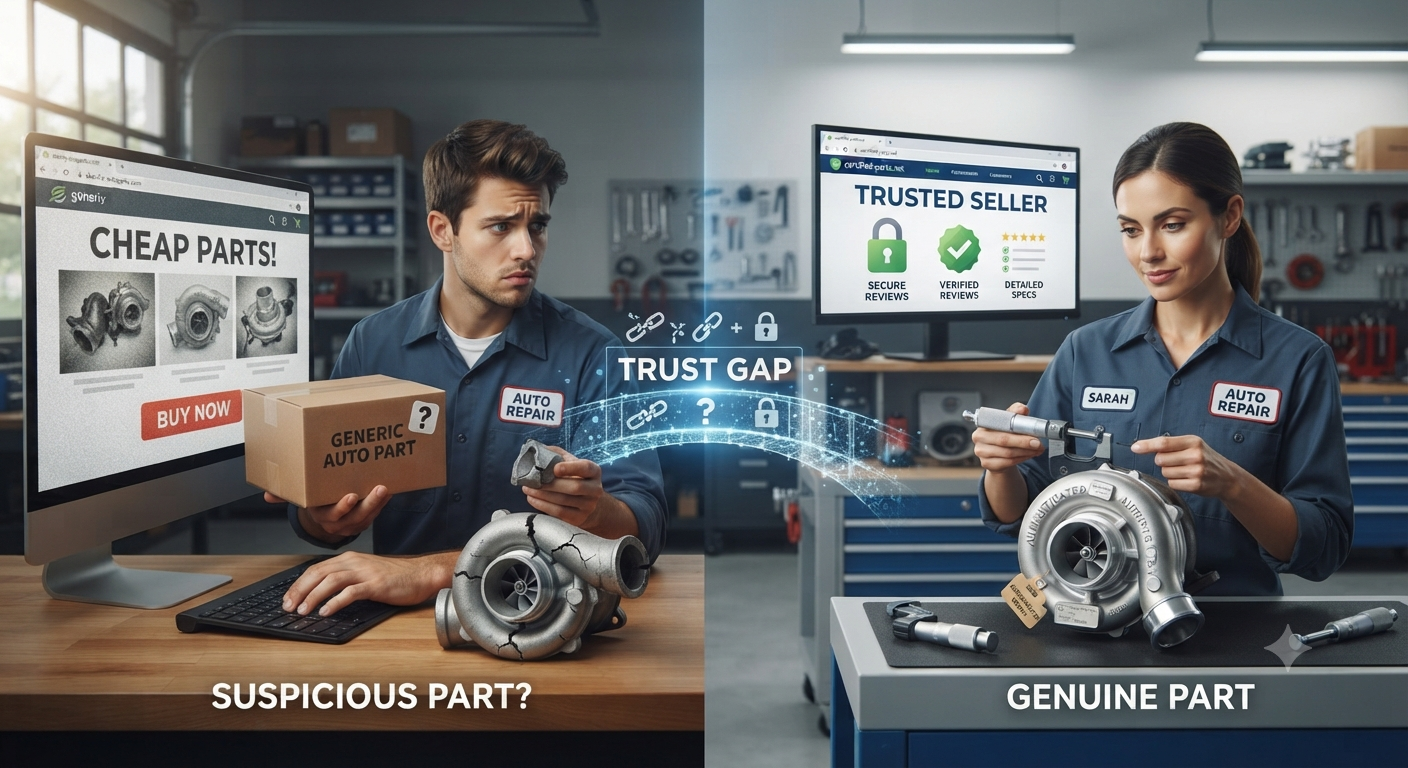
Evaluate used Jaguar parts suppliers before you evaluate the part itself. A supplier’s track record, return policy, warranty terms, and how they respond when something goes wrong matter more than the listing price. Reputable used Jaguar parts suppliers will provide the donor vehicle VIN upon request, describe grading and condition clearly, offer at minimum a 30-day return window, and have customer reviews that mention actual purchase experiences rather than just ratings. If the supplier can’t tell you where the part came from, their review history is thin, and their return policy has more exceptions than the policy itself, move on.
Check photos carefully. For mechanical and electronic components, condition photos showing connectors, mounting surfaces, and any visible wear or damage are the minimum standard. For body and trim parts, you want to see the actual item, not a stock photo. Any serious supplier of used Jaguar auto parts will photograph what they’re selling, not what the part looks like when new.
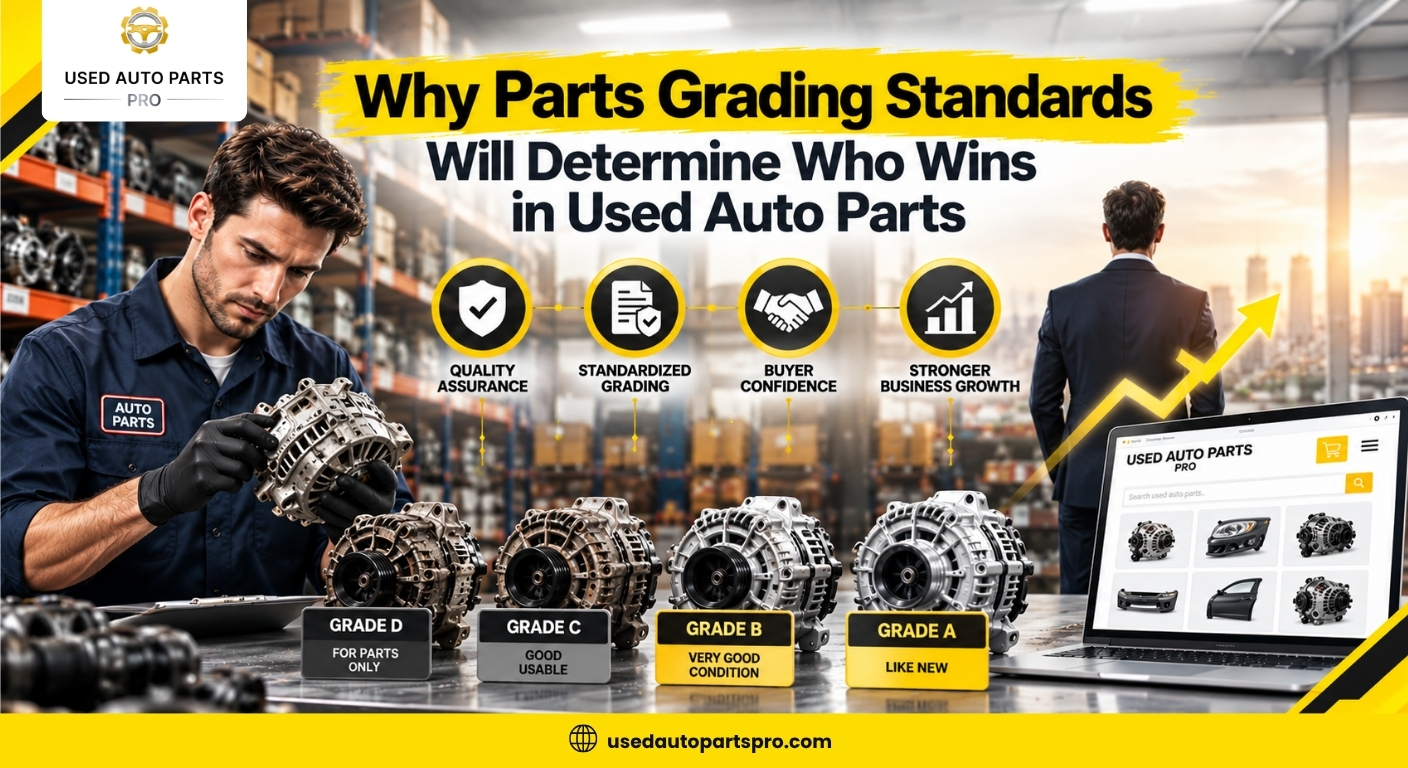
Understand grading. Most serious used Jaguar parts suppliers use condition grades, A, B, C, or similar systems, to communicate the state of what they’re selling. Grade A typically means low mileage, no visible damage, and fully functional. Grade B means minor cosmetic imperfections, but it is functionally sound. Grade C is usually for core return situations where the part needs rebuilding. Know which grade you’re buying before you complete the order.
Confirm compatibility before checkout. Even with the correct part number in hand, a quick confirmation with the supplier that your VIN matches their part is worth the extra few minutes. Jaguars, particularly the XJ, XF, and XE ranges, had multiple subvariants within model years with different specification levels that affect parts interchangeability. The best used Jaguar OEM parts suppliers will have fitment verification tools built into their ordering process or a technical team you can reach before buying.
Popular Jaguar Models and the Parts That Drive the Most Savings Online
The Jaguar lineup spans everything from the sporty F-TYPE to the flagship XJ saloon, and parts availability in the used market varies meaningfully across models. Understanding where your specific car lands in that availability picture helps you set realistic expectations before you start searching.
The Jaguar XF, produced since 2007 across two generations, is the most common Jaguar on the road in most markets, which means the used parts supply is deepest and most competitive. If you own an XF, used Jaguar car parts are genuinely easy to find in good condition, and pricing reflects that supply. Suspension components, body panels, interior trim, and electronic modules for the XF are regularly available from multiple reputable used Jaguar parts suppliers at prices that make maintaining one of these cars very manageable.
The Jaguar XJ, especially the long-running X350 and X358 generation from 2003 to 2009, has a loyal ownership community and a correspondingly active used parts ecosystem. Air suspension components, which are a known maintenance item on these cars, are among the most commonly sourced and used Jaguar spare parts online. A new dealer air suspension compressor for an XJ can run $900 or more. A tested used unit from a quality used Jaguar parts online source often lands between $150 and $280, a saving that, over a lifetime of ownership, compounds significantly.
The XE and XF Sport models from the 2015-onward generation use more proprietary electronics and advanced driver assistance hardware, which means the savings on individual components can be even more dramatic when those items are available used. Adaptive headlight assemblies, electronic parking brake modules, and integrated driver assistance sensors are all examples of components where used Jaguar auto parts pricing can undercut dealer pricing by 60 to 80 percent.
The F-PACE, E-PACE, and I-PACE represent the newest generation of the Jaguar range. Parts availability in the used market is naturally thinner for newer vehicles, but it’s growing as more of these cars reach the age where repair becomes a meaningful conversation. For mechanical and body components on these models, searching for used Jaguar parts online is already returning useful results from insurers’ total losses and high-mileage trade-ins.
The F-TYPE is a different kind of conversation. It’s a lower-volume sports car with higher specification components, and used parts availability is more limited. That doesn’t mean the search isn’t worth doing. When F-TYPE parts are available from reputable used Jaguar parts suppliers, the savings on items like suspension components, exhaust components, and body panels can still be substantial. It just requires more patience and more specific searching than you’d need for an XF or XJ.
Regardless of which Jaguar you own, the approach is the same: know your part number, choose your supplier carefully, verify compatibility before ordering, and don’t let the convenience of dealer stock talk you into paying a price that doesn’t reflect what the part is actually worth. The used Jaguar car parts market is mature, well-supplied, and increasingly well-organized. Owners who search intelligently for used Jaguar car parts are spending meaningfully less on maintenance and repairs, not by cutting corners, but by refusing to overpay for components that the used market can supply at a fraction of dealer cost.
Whether you’re replacing a single trim piece or sourcing components for a major repair, the process of buying used Jaguar parts online rewards the same things: preparation, attention to detail, and the patience to shop right rather than shop fast. That combination, applied consistently, is how smart Jaguar owners keep their cars in excellent condition without the ownership costs spiraling out of control.