Table of Contents
The Parts Decision Every Car Owner Gets Wrong at Least Once
When Something Breaks, What You Buy Next Changes Everything
You are looking at a repair estimate. The part your mechanic needs is available in two versions: a brand-new aftermarket replacement that looks affordable, and a used OEM car parts option that costs considerably less than the dealer price while offering something the aftermarket version cannot match. Most car owners make this decision based entirely on sticker price and move on. Most of them end up wishing they had thought about it longer.
This blog makes that decision easier, because the case for used OEM car parts in long-term car maintenance is stronger than most owners realize, and the case against aftermarket car parts for critical components is more specific than the simple argument that aftermarket is cheap. Understanding what actually separates these two categories, and where that separation shows up in the real-world performance of your vehicle, is the difference between a parts strategy that serves you well over years of ownership and one that keeps sending you back to the shop.
What Used OEM Car Parts Are and Why the Distinction Is Not a Marketing Claim
OEM Means the Actual Original Part, Not a Copy of It
OEM stands for Original Equipment Manufacturer. Every part installed in your vehicle when it left the factory was built to an exact specification set by the automaker. Those specifications cover dimensions, material composition, tolerance ranges, electrical characteristics, and how the part communicates with every system around it. Used OEM car parts are those same components, pulled from vehicles that have been written off, traded in at the end of life, or professionally disassembled. They are not approximations of the original. They are the original, with service miles on them.
That is a meaningful distinction. When you source original used car parts from a reputable platform like Used Auto Parts Pro, you are getting a component that was engineered and manufactured to the same tolerances your vehicle was designed around. The connector fits because it was made for that exact connector. The sensor reports the right data because it was calibrated for that exact system. The bracket lines up because it was stamped to the same specification as the one that came off your car on the assembly line. There is minimal guesswork when verified correctly about fit.
This is the core practical advantage of used OEM car parts, and it matters more as vehicles become more complex. Modern cars are deeply integrated systems where one component talking to everything around it in a slightly different way can cause cascade effects: warning lights that are hard to trace, performance degradation that shows up gradually, and wear on adjacent components that happens faster than it should. Original used car parts eliminate all of that uncertainty at the source.
How Aftermarket Parts Are Made and Where the Gap Shows Up
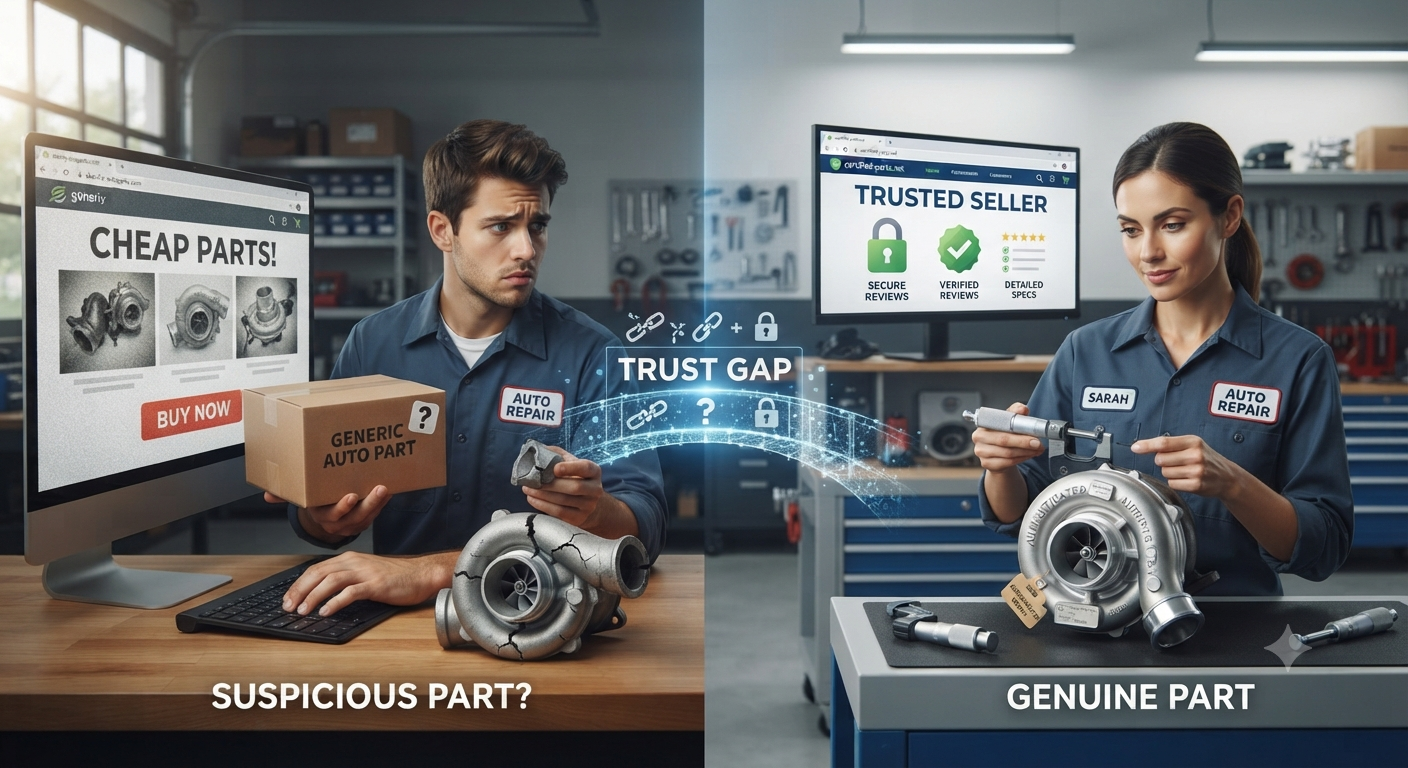
Aftermarket manufacturers take an OEM component, measure it, study its characteristics, and try to reproduce it. Some do this well. Some do not. The quality varies enormously between manufacturers, between product lines within a single manufacturer, and even between production batches. There is no single standard that governs aftermarket car parts quality the way the original vehicle program governed the OEM component it is trying to replace. When an aftermarket part works well, it works. When it does not, the failure mode is often difficult to trace because nothing about the part is obviously wrong.
The failure that is hardest to catch is also the most common: the aftermarket car parts that function at 90 percent of OEM spec rather than failing outright. Brakes that stop the car but wear unevenly over time. Sensors that pass the initial calibration check but drift at temperature extremes. Electrical modules that power on and communicate correctly in most conditions, but introduce intermittent issues under load. Each of these scenarios looks like an unrelated problem when they surface. Each of them traces back to a part that was not quite right from the moment it was installed. Used OEM car parts simply do not introduce that category of risk.
The Long-Term Car Maintenance Case for Used OEM
True Part Cost Is Not the Number on the Invoice
The most important reframe in this conversation is about how you calculate what a part actually costs. The real cost of any replacement component is the purchase price, plus the labor to install it, plus the labor and parts cost of replacing it again if it fails prematurely, plus any diagnostic time spent chasing problems it caused before it failed outright. Calculated that way, the math on aftermarket car parts looks significantly less attractive than the initial price suggests.
Experienced mechanics see this pattern constantly. An aftermarket ABS module that triggers a fault code intermittently for months before anyone figures out it was the module and not the sensor it was blaming. An aftermarket tie rod end that passes inspection but introduces a steering wander that only shows up at highway speed. Every one of these scenarios costs more in the end than simply buying the right part in the first place.
Fit and System Integrity Across the Life of the Vehicle
Long-term car maintenance is a cumulative game. The decisions you make when something breaks today affect what breaks next year and what your vehicle is worth in three years. Parts that do not fit precisely create micro-stress on mounting points. Sensors that report slightly different values than the vehicle expects can cause the engine management system to compensate in ways that affect fuel economy and emissions equipment lifespan. Hydraulic components with slightly different pressure characteristics than OEM spec can affect brake feel and consistency across temperatures.
These effects accumulate. Over 100,000 miles, the difference between a vehicle that has been maintained with quality used OEM car parts and one where critical systems have been repaired with lower-quality aftermarket car parts shows up in reliability, performance consistency, and how the vehicle presents in a pre-purchase inspection. Mechanics doing pre-purchase evaluations notice when things do not look right, even if they are technically functional. That observation affects trade-in offers and private sale prices in ways that owners rarely anticipate.
There is also a diagnostic clarity argument for used vehicle parts sourced from OEM stock. When a vehicle that has been maintained with original components develops a new fault, the diagnostic path is cleaner. You know that the parts surrounding the failure are correct, that the communication signals are what the vehicle expects, and that the problem you are chasing is an actual failure and not an aftermarket approximation behaving unexpectedly. That clarity saves time and money on every subsequent repair.
How to Buy Used OEM Car Parts Without Getting Burned
The quality of any used OEM car parts purchase comes down to two things: the supplier you choose and the verification steps you take before committing. The used auto parts market has professional, reputable suppliers who test components, grade them accurately, and back them with real warranty coverage. It also has sellers who move inventory quickly by keeping listings vague and hoping buyers skip the verification steps. The difference between those two categories starts with a few straightforward practices.
Find the OEM part number before you shop. Every original component has a manufacturer part number specific to your vehicle’s year, make, model, trim level, and often production date window. That number is the anchor for any used vehicle parts search. Your VIN will produce it through the manufacturer’s parts catalogue, an independent fitment database, or a dealer parts inquiry. With that number in hand, you are searching for a specific, verifiable component rather than a category match that might or might not be correct for your application.
Evaluate the supplier before you evaluate the part. A reputable source of used OEM car parts will provide the donor vehicle VIN on request, describe the condition honestly using a clear grading standard, and back the part with a written warranty of at least 30 days, preferably 60 to 90. Their review history will reflect actual customer experiences with actual parts. Suppliers who cannot provide donor information, who grade parts without having physically inspected them, or whose return policies contain more exceptions than coverage are worth skipping regardless of price.
Understand what grading means before you commit. Grade A used vehicle parts from a serious supplier mean low mileage on the donor vehicle, no physical damage, and confirmed functional condition. Grade B means cosmetic imperfections but sound mechanical function. Grade C typically means a partial or core condition requiring additional work. The grade is only useful if it reflects a genuine inspection rather than an estimate, so asking how the supplier assesses condition is a reasonable and clarifying question before any money moves.
Get warranty terms in writing. Any supplier of used OEM car parts who is confident in what they are selling will put their coverage in writing without hesitation. A verbal warranty is not a warranty. A written 30-to-90 day coverage window on used vehicle parts is the standard in this market. If a seller will not document their terms before you pay, that tells you something concrete about how much confidence they have in the part’s actual condition.
Which Part Categories Make the Strongest Case for Used OEM Over Aftermarket
Not every component carries the same risk when you choose aftermarket over OEM. Some categories are forgiving. Others are precisely where a used OEM car parts approach makes a measurable, tangible difference in how your vehicle behaves over the following years of ownership.
Electronic control modules are the clearest case. Engine control units, body control modules, transmission control modules, and ABS modules all need to communicate within exact parameters that the vehicle was designed around. These are not parts where being close is good enough. An aftermarket car parts module that communicates at 95 percent of the OEM spec will cause issues that are difficult to diagnose and expensive to trace. Used OEM car parts in this category remove that risk entirely because the communication architecture is identical to what the surrounding systems expect.
Sensors of all types, including oxygen sensors, mass airflow sensors, throttle position sensors, and camshaft and crankshaft position sensors, are similarly well-suited to the used vehicle parts approach. Their calibration is specific to the engine management system they serve. An aftermarket sensor that reads slightly differently under thermal stress or at the extremes of its operating range will cause the ECU to compensate in ways that affect fuel economy, emissions, and engine longevity over time. A tested used OEM car parts sensor does none of that.
Suspension geometry components, particularly on vehicles with adaptive or air suspension, are another strong category for original used car parts over aftermarket. The geometry of these systems is engineered to precise tolerances that affect how the vehicle handles, how tires wear, and how related components age. Small deviations from OEM specification create wear patterns that show up slowly and are rarely traced back to the replacement part that introduced them.
Body panels, mirrors, door trim, and exterior components round out the picture as strong candidates for used vehicle parts sourcing. Condition is largely visual and verifiable; fit is typically correct when the part comes from a compatible generation of the same vehicle, and the pricing advantage over new OEM dealer parts is typically substantial, often running 40 to 70 percent less for parts in excellent condition. This is where the value case for used OEM car parts is most immediately obvious, and it is a good place to build confidence in the sourcing process before applying it to higher-stakes mechanical components.
Good car maintenance is not just about frequency. It is about the quality of the decisions you make when something needs replacing. Building a parts strategy around used OEM car parts sourced from suppliers who know their inventory, test what they list, and stand behind what they ship is one of the most practical investments a car owner can make in the long-term reliability and value of their vehicle. The upfront cost is reasonable. The downstream benefit compounds with every mile.
The resale value argument is one that surprises car owners when they first hear it laid out clearly. A vehicle with a documented history of quality parts and consistent maintenance commands a better price on trade-in and in private sale than an equivalent vehicle where the service records show a patchwork of generic replacements. When a buyer or their mechanic runs a pre-purchase inspection, the quality of replacement components is visible. Connectors that do not quite match the vehicle harness. Sensor housings are slightly different from the original fitment. Module faces that are unmarked where the OEM version carried the manufacturer designation. None of these things automatically means the car is worse. But they introduce questions, and questions reduce offers.
The practical answer to that dynamic is building a parts history that your car can show for itself. Every time you source used OEM car parts from a supplier who documents the donor vehicle, grades condition accurately, and backs the sale with a written warranty, you are adding to a service record that holds up under scrutiny. That documented parts history does not just protect your confidence in how the vehicle runs today. It becomes a verifiable asset when you decide to sell or trade, and the difference between a well-documented history and a vague one translates directly into dollars at the point of transaction.
There is also a practical dimension to the availability of used vehicle parts sourced from OEM stock that often surprises first-time buyers. For vehicles more than five to seven years old, dealer new OEM pricing for certain components becomes genuinely steep, and the alternative is typically a generic aftermarket option with variable quality. The used OEM car parts market fills that gap with components carrying the original specification at a price that makes sound maintenance economically realistic. For owners of older European vehicles, Japanese performance cars, and American trucks with complex electronic systems, this is not a minor convenience. It is what makes responsible ownership financially viable at all for many of these platforms.
The environmental argument deserves mention, even if it is not the primary driver for most buyers. Every used OEM car parts purchase is a reuse of a component that already exists rather than a new manufacturing event. The energy, raw materials, and supply chain activity that produced that part already happened when the original vehicle was built. Choosing a quality used original component over a newly manufactured replacement is, from a resource perspective, the more efficient decision, and one that requires no sacrifice in performance or reliability when the sourcing is done correctly.
OEM stands for Original Equipment Manufacturer. OEM parts are the actual components your vehicle was built with, engineered to exact specifications for fit, tolerance, and system compatibility. Used OEM car parts are those same components pulled from salvage or end-of-life vehicles, not copies or approximations, which means they integrate with your vehicle exactly as the original did.
Aftermarket parts are manufactured reproductions of OEM components with no universal quality standard governing them. The most common failure mode is not outright breakdown, but parts that function at 90 percent of OEM spec, causing issues like uneven wear, sensor drift, and intermittent electrical faults that are difficult to diagnose and trace. Used OEM parts eliminate that category of risk entirely.
When you factor in the true cost, including labor to reinstall a failed part, diagnostic time chasing problems it caused, and wear on adjacent components, aftermarket savings often disappear. A used OEM part that runs 150,000 miles costs far less than an aftermarket equivalent that fails at 40,000 and takes two labor bills to resolve.
Electronic control modules, sensors, and suspension geometry components carry the highest risk when sourced from aftermarket suppliers. ECUs, ABS modules, oxygen sensors, and mass airflow sensors all depend on precise calibration that aftermarket versions frequently approximate rather than match. Body panels and exterior trim are also strong candidates where fit and price advantages are immediately obvious.
Start with the OEM part number specific to your vehicle's year, make, model, trim, and production window. Your VIN will produce it through the manufacturer's parts catalog, an independent fitment database, or a dealer parts inquiry. Shopping with that number anchors your search to a verified match rather than a general category fit.
A reputable supplier will provide the donor vehicle VIN on request, grade parts using a clear and honest condition standard based on physical inspection, and back every sale with written warranty coverage of at least 30 days, ideally 60 to 90. Suppliers who cannot provide donor information or whose return policies are full of exceptions are worth skipping, regardless of price.
Grade A indicates low donor vehicle mileage, no physical damage, and confirmed functional condition. Grade B means cosmetic imperfections with sound mechanical function. Grade C typically indicates a partial or core condition requiring additional work. Grades are only meaningful when they reflect a genuine inspection, so asking how the supplier assesses condition is always a reasonable question.