Table of Contents
EVs are entering salvage yards at a pace the recycling industry wasn’t ready for. The components coming off those cars – motors, inverters, battery modules, drive units – still have years of useful life. Here’s why the electric vehicle used auto parts market is moving fast in 2026, and what it means for anyone repairing or owning an EV.
Electric vehicles aren’t a future-tense story anymore. In 2025, global EV sales approaching 20 million units for the first time. Those vehicles are aging, getting into accidents, and cycling through insurance write-offs the same way gas-powered cars always have. The difference is that when a Tesla gets totaled or a Bolt is declared a total loss, the components on it – drive units, inverters, battery packs, thermal systems – still have significant operating life left. They’re now entering the supply chain as electric vehicle used auto parts at a fraction of what those components cost new.
This isn’t a niche corner of the market. It’s a supply chain shift happening in real time. Salvage operations are retooling for high-voltage systems. Shops that service EVs are learning which components hold up and where to source electric vehicle used auto parts without paying dealer prices. The demand has been building quietly for two years. In 2026, it’s not quiet anymore.
Connect With EV Parts Suppliers Through Used Auto Parts Pro →
What's Actually Driving Demand for Electric Vehicle Used Auto Parts
The core driver is straightforward: more EVs on the road means more EVs in accidents, and more EVs written off by insurers. That produces more usable components entering the supply chain. The global automotive recycling market is valued at $281.6 billion in 2026 and growing, and EV components are an increasingly significant slice of it.
Adoption accelerated sharply through 2023 and 2024. Vehicles sold in those years are now at the age where accidents and total losses become statistically common. A three-year-old EV with a structural write-off from a side impact still has a functioning drive unit, a working inverter, an intact battery module. Those are the components that make EVs expensive – and they survive most of the accidents that total the vehicle.
Cost is the second driver. A replacement battery pack for a popular EV model can run $15,000 to $20,000 – sometimes approaching the car’s resale value. Dealer-sourced drive units and inverters carry similarly steep pricing. The demand for electric vehicle used auto parts follows directly from that math. When new parts cost that much and tested used alternatives are available at 40 to 60 percent less, buyers find them.
The third driver is lead time. New EV components, especially proprietary ones, often take weeks to source through manufacturer channels. A used component from a domestic recycler can arrive in days. For a shop with a car on a lift and a customer waiting, that difference matters.
How Sourcing Electric Vehicle Used Auto Parts Actually Works
Sourcing electric vehicle used auto parts doesn’t follow the same logic as traditional salvage sourcing, and understanding that difference helps buyers make better decisions.
In a combustion engine, wear is the central concern. You’re buying remaining service life from a component that degrades continuously through use. EV motors work differently. Fewer moving parts, no oil degradation, no timing chain or valves. A drive unit with 65,000 miles on it isn’t worn in the same way a combustion engine with 65,000 miles is. The failure modes are different, which changes what you look for when evaluating a used component.
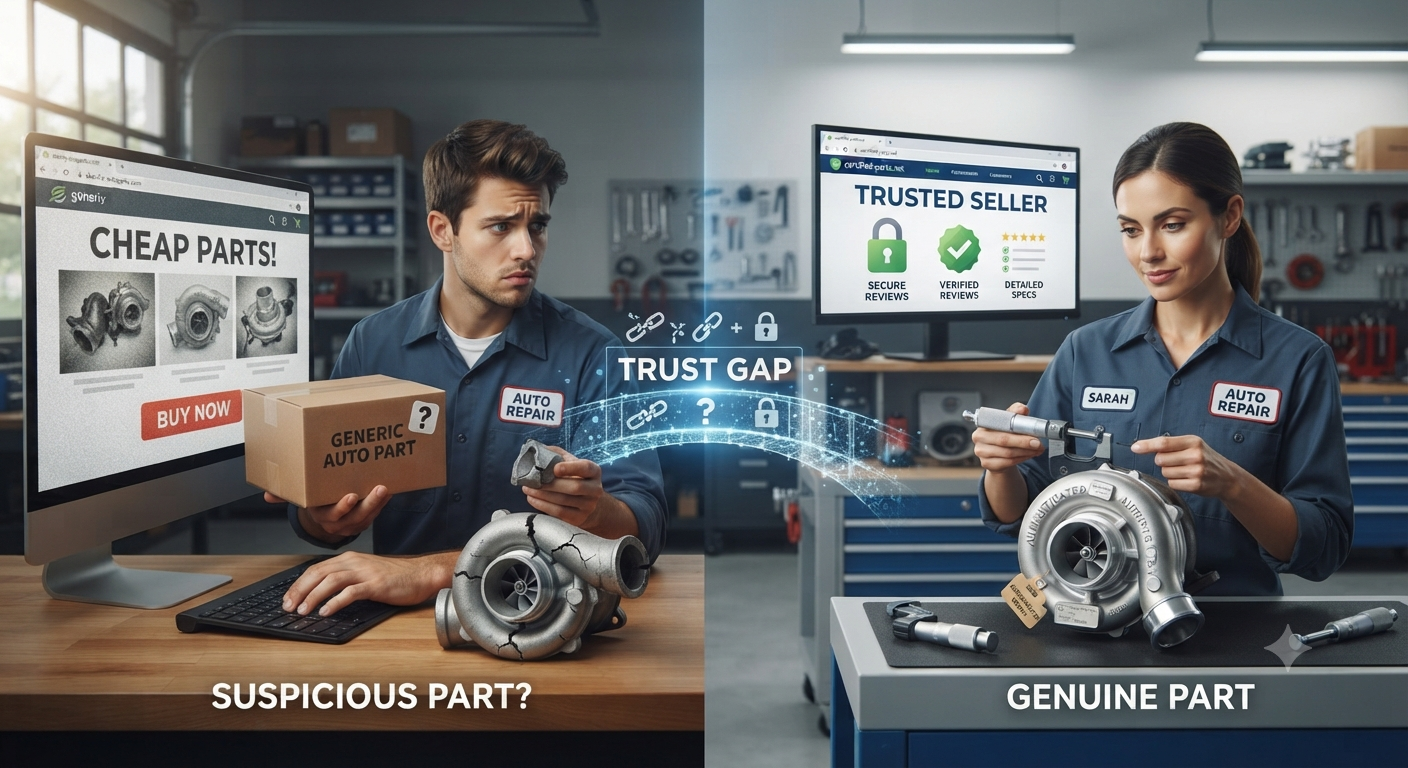
Testing protocols are more important here than in traditional parts sourcing. Used electric vehicle components need to be evaluated for battery state-of-health – voltage, capacity, and cell balance – not just visual inspection. A reputable supplier tests before listing. That testing process is what separates a reliable source from a gamble, and it’s the first question worth asking any supplier before placing an order.
Safety handling is also a meaningful differentiator. High-voltage battery systems require trained dismantlers and certified protocols. Recyclers operating professionally in this space have invested in proper tooling and certified staff – and that investment tends to produce better documented, better tested parts. The presence of proper certification is a reliable filter when evaluating suppliers.
The Specific Used EV Parts Worth Knowing About
Not everything on a totaled EV makes sense to source used. Here’s where the value concentrates in the electric vehicle used auto parts market:
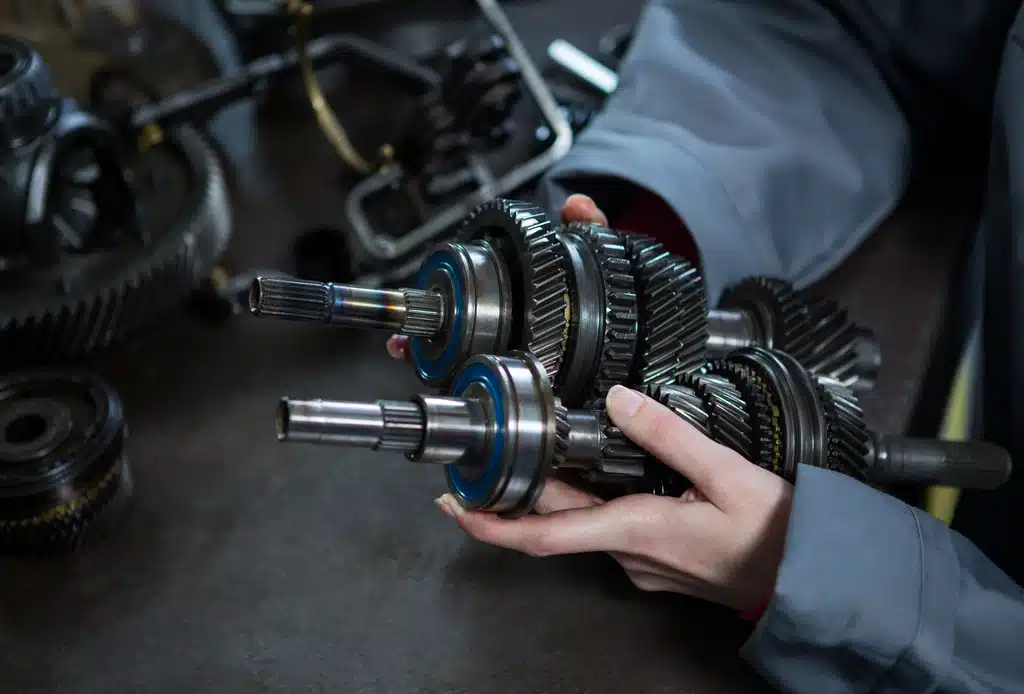
Drive units (motors and gearboxes): One of the highest-value recoverable components on any EV. EV motors have lower mechanical wear compared to ICE, but still subject to electrical and thermal stress compared to combustion engines. A drive unit from a collision write-off with 55,000 miles is, in most practical cases, often performs comparably when tested and sourced properly. New replacements from dealers frequently run $4,000 to $8,000. Used alternatives from the same model year typically run $1,500 to $3,000, tested and documented.
Battery modules: The highest-dollar opportunity and the one requiring the most diligence. Individual modules can be tested for state-of-health and cell balance. A module documenting 88 to 92 percent of original capacity is a viable replacement for most applications. The savings versus new are substantial – often several thousand dollars per module. Ask for the test report, not just the spec sheet.
Inverters and on-board chargers: Used electric vehicle components in this category are among the most cost-effective to source. These are solid-state electronics – they either work or they don’t. A tested, functional inverter from a same-model donor vehicle performs identically to a new one at a significantly lower price. Premiums from dealer channels on these parts are substantial.
Thermal management systems: Battery cooling components – pumps, coolant lines, heat exchangers – are practical used EV parts for shops that need them outside the dealer network. Condition is straightforward to assess visually, and pricing is significantly below OEM replacement cost.
Touchscreens and infotainment hardware: Frequently in excellent condition on total-loss vehicles. These components survive most accidents intact and sell at meaningful discounts to OEM. Demand is steady and parts are relatively easy to source.
What the Cost Difference Actually Looks Like
The 50 to 70 percent savings often cited for used EV parts versus new isn’t marketing language – it shows up on specific line items when you price the comparison directly.
Take drive units. On a Model 3, a new rear drive unit through Tesla service runs approximately $5,500 to $7,000 installed. A tested used unit with under 70,000 miles from a reputable recycler: $1,800 to $2,800, depending on generation and availability. The repair gets done at roughly the same quality. The customer pays roughly $3,000 to $4,000 less. That’s not a minor variance – it’s the difference between a repair that makes financial sense and one that doesn’t.
Battery modules are even starker. Full pack replacements through OEM channels can run $10,000 to $20,000 depending on the vehicle. A tested module from a low-mileage donor – capacity documented at 90 percent or above – can handle the same repair for $2,500 to $6,000. For older EVs especially, that gap determines whether the car is worth fixing at all. Knowing your way around the electric vehicle used auto parts space is the difference between a car that gets repaired and one that gets traded in at a loss.
The savings follow the same logic that made the recycled market for combustion vehicles viable decades ago. When dealers control the only new-parts channel and prices reflect that monopoly, the used alternative becomes the financially rational choice. For EV components in 2026, that dynamic is fully in play.
What to Watch for When Sourcing Used Electric Vehicle Components
The quality range in this market is wide. Suppliers who have invested in testing infrastructure and certified dismantling produce reliably documented parts. Others are selling components with no real verification of condition. A few questions separate one from the other.
For battery modules: ask for the state-of-health report showing individual cell voltage and overall capacity as a percentage of original spec. Any supplier handling used electric vehicle components seriously will produce this. If they can’t or won’t, that’s the answer.
For drive units and motors: ask for the mileage and how the donor vehicle was totaled. A rear-end collision with an intact front-end drivetrain is a clean source. A front-end impact that sent shockwaves through the drive unit is a different story. The dismantler should know which it was. Mileage matters here too – an EV motor is durable, but a 180,000-mile unit and a 55,000-mile unit aren’t the same product.
For inverters and chargers: functional testing under load is what counts. A bench-tested, cleared-fault component is worth paying a modest premium for over an untested one. The electric vehicle used auto parts suppliers operating at professional standards test everything before it goes on the shelf.
Return policy is non-negotiable. EV components require vehicle-specific compatibility, and a supplier confident in their parts offers a return window. One who doesn’t is telling you something.
Why 2026 Is a Turning Point for This Market
The numbers tell the story directly. The global automotive recycling market is valued at $281.6 billion in 2026. EV component recycling is growing at a compounding rate – battery recycling alone is tracking a 27.7% (projected CAGR) year-over-year increase. The electric vehicle used auto parts market that barely existed four years ago now has professional operators, standardized testing, and growing inventory across the country.
The EV fleet on American roads has reached critical mass. Vehicles from the 2020 to 2022 model years are now in the age range where total losses happen at the highest rates. That means the supply of recoverable drive units, battery modules, inverters, and thermal systems is growing faster than the repair market can absorb it. Availability is improving and pricing is competitive.
For shops that service EVs, 2026 is the year when sourcing electric vehicle used auto parts from recyclers becomes standard practice rather than a last resort. For owners facing large repair bills, it’s the year when the alternative to a $15,000 dealer quote actually exists at scale. The infrastructure caught up with the demand. That’s what a turning point looks like.
FAQ
For the right components, yes – and sometimes more reliably than combustion equivalents at the same mileage. EV motors don’t have oil to break down or timing chains to skip. A drive unit with 60,000 miles on it hasn’t been through anything close to the wear a combustion engine has at the same point. That said, reliability depends heavily on which component you’re buying and whether it was properly tested before sale. Every reputable supplier of electric vehicle used auto parts knows this and builds testing into the process. A tested, documented battery module or drive unit from a professional recycler is a legitimate repair option. An untested unit from a source that can’t tell you how the donor vehicle was totaled is a gamble. The part isn’t the variable – the supplier is.
Get the state-of-health report. A competent supplier of used electric vehicle components will have tested the module for individual cell voltage, pack voltage, and overall capacity as a percentage of original spec. Anything above 85 percent is generally considered viable for most repair applications; above 90 percent is good. If a supplier can’t hand you that documentation, don’t buy the module. This is the one component in the EV recycling market where cutting corners on documentation has real consequences. Ask for the report before you ask about the price.
Yes, when sourced from reputable suppliers. Quality recycled components come with mileage documentation, inspection records, an, in many cases, limited warranties. Engines, transmissions, body panels, electrical components, and suspension parts are routinely sourced from recyclers for professional repairs. Car maintenance performed with properly sourced recycled parts has a well-established track record in the industry.
Reputable suppliers offer limited warranties on electric vehicle used auto parts – typically 30 to 90 days for electrical components, sometimes longer for drive units. The warranty terms tell you a lot about how confident the supplier is in their testing process. A 90-day warranty on a drive unit from a supplier who tested it under load means something. A 7-day ‘as-is’ policy means something different. Ask what the warranty covers before you commit. Returns on incompatible parts should also be available – EV components require vehicle-specific matching and a supplier who won’t accept returns on fitment issues isn’t worth the risk.
When the module is properly tested and installed by a qualified technician, yes. The safety concern centers on cell integrity – a damaged or degraded cell can cause thermal issues under charge or load. That’s why state-of-health testing matters. A module with documented cell balance and capacity within normal range doesn’t pose safety risks beyond any other battery installation. Standardized testing protocols exist across this industry precisely because this question comes up constantly. Work with a supplier who follows them and a shop certified for high-voltage work.
The professional end of this market has consolidated around recyclers who invested in EV-specific tooling and certified dismantlers ahead of the demand curve. Used Auto Parts Pro connects buyers directly with vetted suppliers in this category – no guessing about who tests their parts and who doesn’t. Tell us the component you need and the vehicle it’s going on. We match you with a supplier who carries it, tested and documented. That’s faster than cold-calling salvage yards and more reliable than sorting through listings that tell you nothing about how or whether the components were tested before listing.
The recycled EV parts market is real, it’s growing, and in 2026 it’s the financially sensible place to start for any major EV repair. We connect buyers directly with vetted domestic suppliers who test what they sell – battery modules, drive units, inverters, thermal systems, and more. No stock held, no guesswork: just a direct line to the right supplier with the right part, documented and ready.
Connect With an EV Parts Sourcing Specialist →
This article is published by Used Auto Parts Pro, a marketplace connecting buyers with quality recycled and salvaged components for electric and conventional vehicles.