Table of Contents
Table of Contents
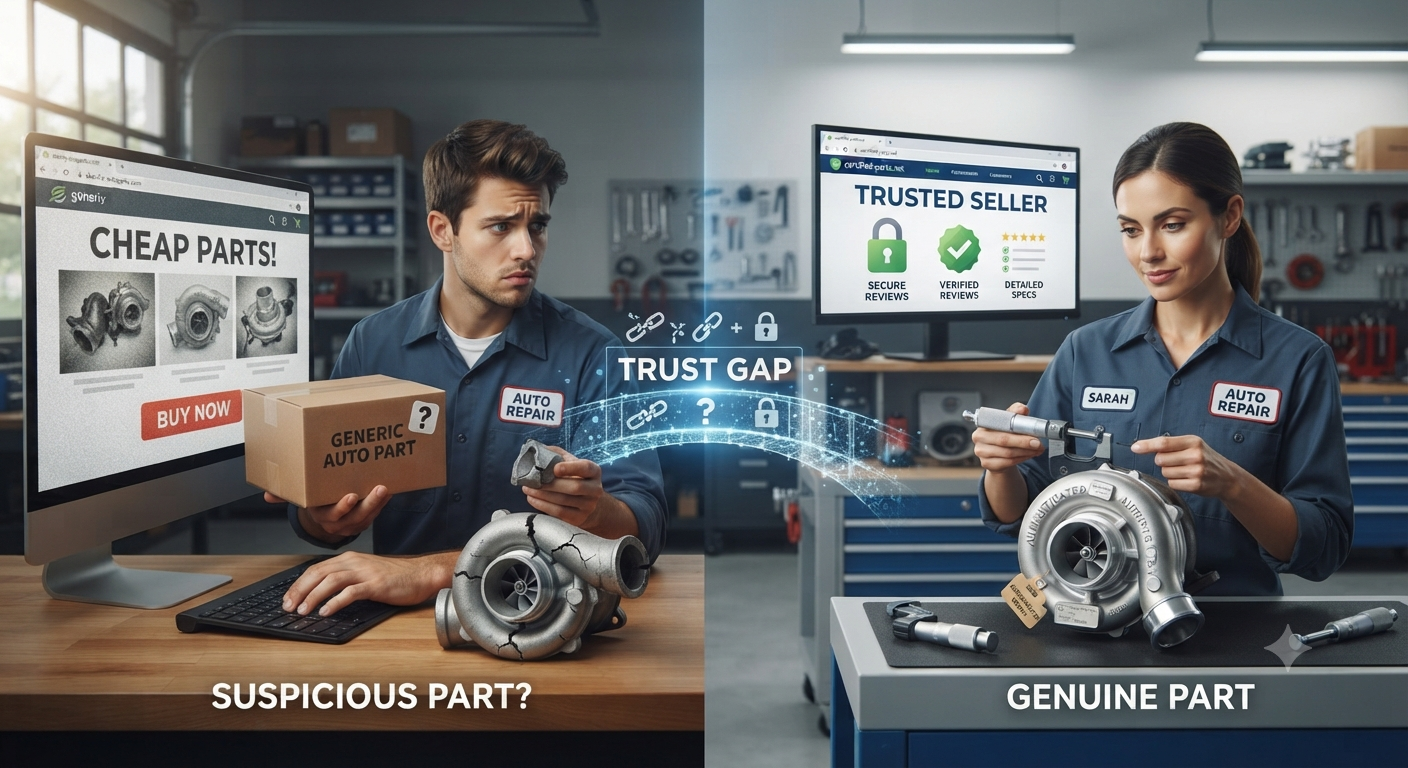
Ask a repair shop what they want from a parts supplier and they will usually say the same thing. They want the right part. They want it fast. They want to be able to count on it. That sounds simple. In practice, the used auto parts market has struggled to deliver all three at once for as long as the market has existed. And understanding why, from the buyer’s perspective, reveals something the vendor side of this industry consistently underestimates. Professional buyers are not primarily optimizing for price. They are optimizing for certainty.
The Gap Between What Gets Measured and What Gets Decided
The used auto parts industry tends to measure buyer behavior through a price lens. Cost savings drive the demand for recycled parts. Rising repair costs push shops toward alternatives. Tariff pressure widens the affordability gap.All of that is true. But price is the entry condition, not the deciding factor.When a professional buyer, a service advisor, a body shop parts manager, a fleet procurement officer, chooses a supplier at the moment of need, the decision rarely comes down to which source is cheapest. It comes down to which source the buyer trusts to deliver what they need, when they need it, without creating a downstream problem that costs more to fix than the initial savings were worth.This distinction matters because it changes what the market actually needs to compete on. Price is necessary. It is not sufficient. And the suppliers who understand that shift, and build their operations around delivering certainty rather than just competitive pricing, are the ones consistently winning professional buyer relationships.
What Buyers Are Actually Signaling
The procurement data from 2025 and 2026 contains a signal the industry should be reading more carefully. The AAPEX 2026 State of the Aftermarket survey of 448 North American aftermarket professionals found that 70% of businesses have diversified or are actively diversifying their supplier base. On the surface that sounds like progress. In practice it reflects a buyer population managing around market uncertainty rather than finding it resolved. IMR research of 500 U.S. repair shops found that 46% identified affordable pricing as their most significant operational challenge, with 22.8% citing parts availability as a close second. Shops are not experiencing the problem as solved. They are engineering workarounds. This is not a story about availability becoming less important. Availability remains critical. The story is about what buyers have learned to substitute when availability cannot be trusted. When a market cannot reliably confirm whether a specific part is in stock, in described condition, and ready to ship, buyers stop relying on real-time listings and start relying on supplier reputation instead. They default to vendors they have used before. They anchor to recognized brands as a proxy for quality assurance. They build in buffer time and buffer stock. That behavioral shift is not evidence of a market functioning well. It is evidence of a buyer population that has learned to compensate for a market that does not yet function reliably.Understanding that compensation behavior is the key insight the industry needs to internalize.
The Three Things Buyers Actually Require
Strip away the complexity and professional parts buyers are asking for three things. Not price. Not selection. Three operational requirements that, when met consistently, produce loyal, high-volume buying relationships. The first is accurate availability. Not “this part is listed in our system.” The confirmation that the specific part, for the specific vehicle, is physically present, in the described condition, and ready to ship or pick up today. The distinction sounds minor. To a shop with a vehicle in the bay and a technician on the clock, it is the difference between an efficient repair and a scheduling collapse. According to the Auto Care Association and MEMA Aftermarket Suppliers’ 2025 Joint E-Commerce Trends and Outlook Forecast, U.S. e-commerce sales of automotive aftermarket parts were forecast to reach approximately $44.6 billion in 2025, including third-party marketplaces (roughly $23 billion excluding them). That is a forecast, not a finalized result, and the report does not break out what share comes from professional B2B buyers specifically, but shops and distributors are a growing part of that channel. The shops driving that growth are not purchasing blindly. They have learned to be selective about where they place high-stakes orders. But online procurement only scales when the data behind it is reliable. Shops that have been burned by inaccurate listings do not abandon online procurement entirely. They become more selective about which platforms and vendors they trust with high-stakes orders, and they revert to phone verification for anything they cannot afford to get wrong. The second requirement is fitment confidence. According to MOTOR magazine, citing National Retail Federation data, close to one in five parts ordered online (19.4%) are returned, a rate the industry ranks among the highest of any retail category, and mismatched fitment is a recurring driver of those returns. Physical parts stores outperform online channels on return rates not because their inventory is better, but because counter staff perform a fitment check before the sale closes.
The Sourcing Behavior Nobody Is Designing For
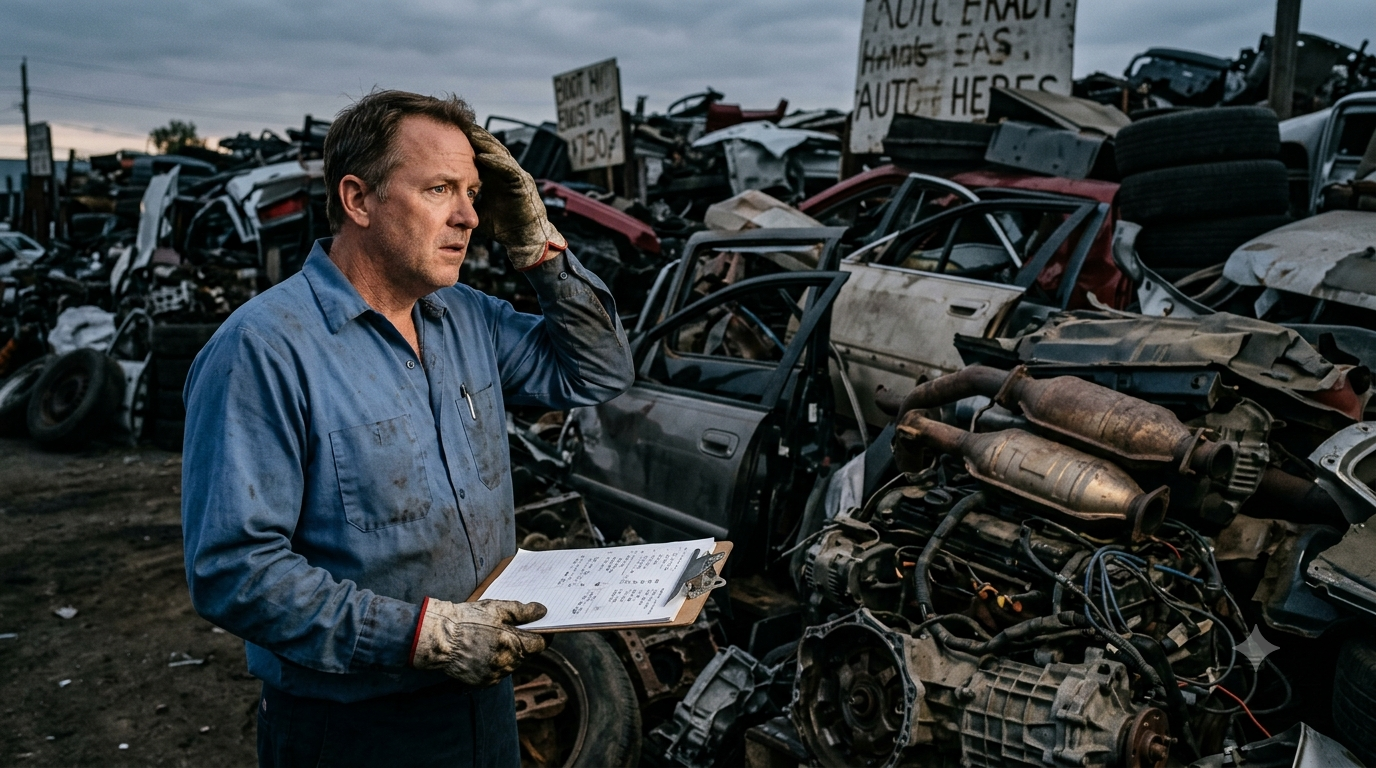
Here is the buyer behavior that parts platforms and vendors consistently underserve. The professional buyer who knows exactly what they need, has a vehicle waiting, and wants to confirm availability and place an order in under three minutes. That buyer is not looking to browse. They are not comparing options. They are executing a transaction that they need to complete fast, accurately, and with confidence that no follow-up call will be required. Most of the used parts sourcing infrastructure in this market is designed for buyers who have time to search, compare, and verify. It does not consistently serve the buyer who is operating under production conditions, managing a shop floor where time is the scarcest resource. Building for that buyer, specifically, is where the market’s next competitive advantage lies. Not broader selection. Not lower prices. Faster, more certain, more trustworthy execution for the professional who cannot afford to be wrong.
What This Means for Vendors
The implication for vendors is direct. Buyers are not asking for more parts. They are asking for more confidence. A recycler with strong inventory and poor fitment documentation will consistently lose to a recycler with comparable inventory and accurate, detailed, verified listings, even on price. Because the operational cost of uncertainty, the verification call, the return, the scheduling disruption, is ultimately borne by the buyer, and buyers allocate their spend to minimize that cost, not just the parts line item. The vendors who will build durable professional buyer relationships over the next five years are not the ones with the lowest prices. They are the ones who make the buyer’s operational risk the lowest. That is the product professional buyers are actually purchasing. Not a part. A reliable outcome. The market has spent years competing on price. The buyers who matter most are competing on something else entirely.
For buyers: when you choose a supplier for a high-stakes order, what matters more — the lowest price, or the confidence that the order closes without a follow-up call? For vendors: how much of your operation is built around delivering certainty versus just delivering inventory