Used Car Engine in Georgia
An engine that throws a rod or overheats past the point of repair is one of the more expensive things that can happen to a car. A new or remanufactured replacement often lands somewhere between $4,500 and $9,000 once labor is added, which is more than a lot of Georgia drivers want to spend on a vehicle that’s already got 90,000 or more miles behind it.
- Engine Code on Block Must Match Your VIN
- Check Oil Cap & Dipstick for Milky Residue
- Coolant Contamination Red Flag – Avoid
- Theta II? Confirm Date & Knock Sensor Hardware
- Ask for Mileage Documentation
- Request Compression Test Results
FIND YOUR PART NOW!
CONGRATS !
You're Almost Done
This is where a marketplace approach helps more than a single storefront can. UAPP doesn’t stock engines and doesn’t sell them directly. What it does is put your VIN in front of a network of independent sellers across the country, so you get several real quotes to compare instead of calling around to salvage yards one at a time. Below: realistic Georgia pricing broken out by engine type, what the state’s emissions rules actually mean for you, and the questions worth asking before you buy.
Check your VIN with Kia or a Kia dealer for recall and warranty-extension eligibility before purchasing a replacement engine on the used market, since you may already have coverage you’re not using.
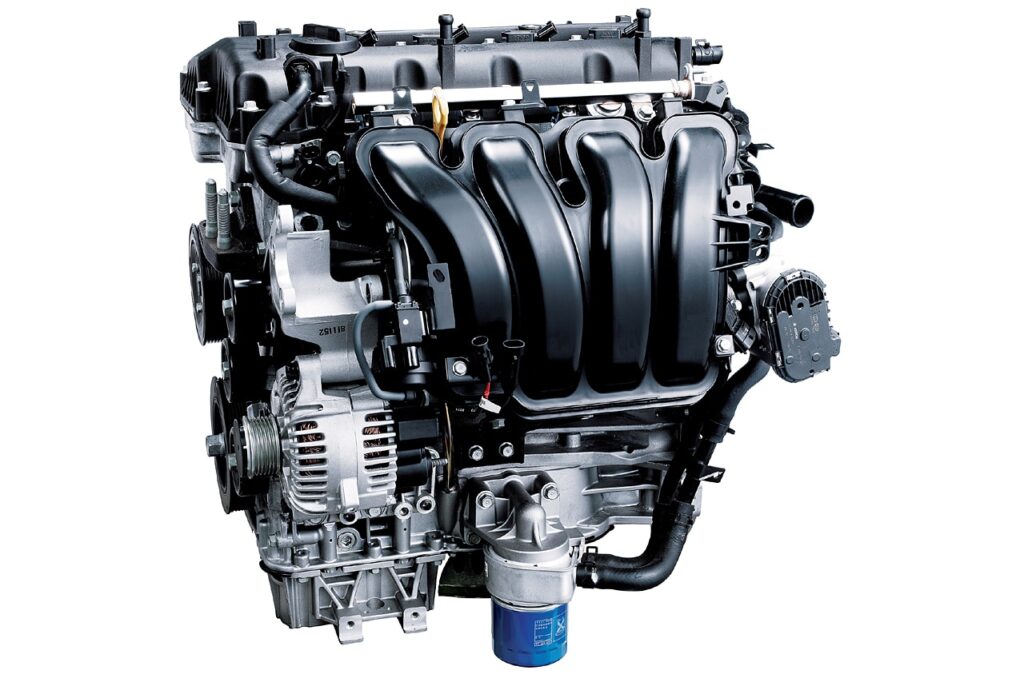

3. Introduction
An engine that throws a rod or overheats past the point of repair is one of the more expensive things that can happen to a car. A new or remanufactured replacement often lands somewhere between $4,500 and $9,000 once labor is added, which is more than a lot of Georgia drivers want to spend on a vehicle that's already got 90,000 or more miles behind it.
A used engine, pulled from a comparable donor vehicle and checked before it's resold, is the alternative most independent mechanics bring up first. It's the same part your car was designed around, at a lower price point than new or remanufactured, and for a huge share of daily-driver repairs it does exactly what's needed. What it isn't is risk-free. Fitment matters, mileage matters, and how thoroughly the seller actually checked the engine before listing it matters a lot.
Georgia's own rules add one more thing to keep in mind. There's no statewide safety inspection here, but drivers in 13 metro Atlanta counties, Cherokee, Clayton, Cobb, Coweta, DeKalb, Douglas, Fayette, Forsyth, Fulton, Gwinnett, Henry, Paulding, and Rockdale, do need to pass an annual emissions inspection at registration renewal. That's separate from anything specific to buying a used engine, but it's relevant if you're keeping the vehicle registered in one of those counties after the swap.
This is where a marketplace approach helps more than a single storefront can. UAPP doesn't stock engines and doesn't sell them directly. What it does is put your VIN in front of a network of independent sellers across the country, so you get several real quotes to compare instead of calling around to salvage yards one at a time. Below: realistic Georgia pricing broken out by engine type, what the state's emissions rules actually mean for you, and the questions worth asking before you buy.
4. Quick Answer
A used car engine is one that's been removed from another vehicle, usually after a collision or total loss rather than engine failure, and made available for resale after some level of inspection. In Georgia, expect to pay roughly $600 to $1,700 for a 4-cylinder, $850 to $2,300 for a V6, and $1,100 to $3,800 for a V8 or diesel truck engine, not including labor. Georgia has no statewide vehicle safety inspection, but 13 metro Atlanta counties require annual emissions testing. UAPP connects buyers to a network of vetted sellers rather than selling engines itself, matching your VIN against listings so you can compare condition, mileage, and price side by side.
5. Key Takeaways
- Georgia does not run a statewide vehicle safety inspection program.
- Annual emissions testing applies only in 13 metro Atlanta counties: Cherokee, Clayton, Cobb, Coweta, DeKalb, Douglas, Fayette, Forsyth, Fulton, Gwinnett, Henry, Paulding, and Rockdale.
- Vehicles 25 model years or older, the three newest model years, and dedicated alternative-fuel vehicles are exempt from Georgia's emissions program.
- Typical pricing runs $600 to $3,800 depending on engine category; see the full breakdown below.
- VIN matching gives strong fitment confidence, but it isn't an absolute guarantee. Confirm details with the seller directly.
- UAPP does not promise, guarantee, or warranty the condition, performance, or longevity of any engine. Any warranty coverage comes from the individual seller, not from UAPP, and terms vary widely, so get them in writing before you buy.
- Shipping cost is folded into the seller's quote. It's never advertised as free because it isn't free; someone pays for freight, and that's disclosed upfront rather than added later.
- UAPP is a marketplace. It connects buyers to independent sellers and does not hold inventory or sell engines directly.
6. Why Georgia Drivers Choose Used Engines
Georgia's vehicle population is heavily concentrated around metro Atlanta, which means a lot of daily commuter mileage on I-285, I-75, and I-85, plus stop-and-go traffic that's harder on engines than steady highway cruising. Outside the metro core, the state splits into a few distinct driving environments: the Piedmont and northern foothills around Athens and Gainesville, the flatter agricultural belt through Middle and South Georgia, and the coastal counties near Savannah and Brunswick where salt air and summer humidity are a bigger factor.
Georgia is also home to a sizable logistics and freight industry, thanks in part to the Port of Savannah, one of the busiest container ports on the East Coast, and the freight corridors running through Atlanta. That drives real demand for diesel and heavy-duty engines in a way that a purely residential state wouldn't see.
Cost matters too. Independent shops across smaller Georgia cities and rural counties often work with customers who can't stretch to a $7,000 remanufactured engine, and a used OEM option priced at a third of that keeps an otherwise sound car on the road instead of pushing someone into a car payment they didn't plan for.
7. Georgia's Vehicle Inspection and Emissions Rules: What Actually Matters for an Engine Swap
Georgia doesn't require a periodic safety inspection the way some states do. There's no statewide checklist covering brakes, tires, or general mechanical condition at renewal time. What Georgia does require is emissions testing, and only in a specific set of counties.
The 13-county emissions zone. Cherokee, Clayton, Cobb, Coweta, DeKalb, Douglas, Fayette, Forsyth, Fulton, Gwinnett, Henry, Paulding, and Rockdale counties require an annual emissions test before registration renewal, run through Georgia's Clean Air Force program. If your vehicle is registered somewhere else in the state, this doesn't apply to you.
Who's exempt. Vehicles 25 model years old or older are permanently exempt. So are the three most recent model years (for 2026 renewals, that's 2024 and newer). Dedicated alternative-fuel vehicles, meaning ones that only run on natural gas, propane, battery power, or hydrogen, are exempt too, though hybrids that can still run on gasoline are not. Diesel vehicles, motorcycles, and RVs are excluded from the program entirely.
If your donor vehicle carried a salvage title. Georgia requires a rebuilt-vehicle inspection before a salvage-branded vehicle can get a clean title back. This isn't something that touches the engine you're buying directly, since a salvage brand attaches to the vehicle, not to individual parts pulled from it, but it's worth understanding if you're evaluating a whole vehicle rather than just sourcing an engine. Georgia's process is notably paperwork-heavy: it requires before-and-after repair photos, receipts for all parts used, the original salvage title, and in some cases the vehicle has to be towed rather than driven to the inspection site. If a seller mentions a donor vehicle went through this process, that's a sign of a more documented history, not necessarily a red flag.
8. Popular Vehicles and Engine Types in Demand
- Ford F-150 and Chevrolet Silverado (V8 and V6 turbo): Common across both metro Atlanta contractors and rural agricultural use in south Georgia.
- Toyota Camry and Honda Accord (4-cylinder): High-mileage commuter sedans logging heavy I-285 and I-75 traffic.
- Freightliner and Kenworth commercial trucks (diesel): Tied to the Port of Savannah and Atlanta's role as a major freight hub.
- Honda CR-V and Toyota RAV4: Popular suburban crossovers across Gwinnett, Cobb, and Forsyth counties.
- Nissan Altima and Hyundai Sonata: Frequently seen in Atlanta rideshare and airport-corridor fleets given Hartsfield-Jackson's volume.
9. Compatibility
VIN-based matching gives you strong confidence that an engine's build specs line up with your vehicle, but it's not an ironclad guarantee. Trim differences, regional emissions equipment variations, and accessory brackets can differ even within the same model year. If a donor vehicle carried a Georgia salvage brand, that status belongs to the vehicle's title, not to a specific engine removed from it. Confirm year, trim, and any known history directly with the seller before committing to a purchase.
10. Common Problems
- Stop-and-go metro Atlanta traffic wear: Heavy commuter congestion on I-285 and connecting interstates puts more strain on cooling systems and accessory components than steady highway driving does.
- Coastal humidity and salt exposure: Vehicles registered near Savannah and Brunswick see faster corrosion on exposed engine components and electrical connectors than vehicles inland.
- Summer heat-cycle stress: Georgia's long, hot summers add extra load on cooling systems, gaskets, and seals, especially on engines already past 100,000 miles.
- Long-haul freight wear: Diesel engines used in Georgia's logistics corridor accumulate high highway mileage relatively quickly, which changes what "high mileage" means for a diesel donor engine compared to a passenger car.
11. Inspection and Quality Standards
How thoroughly an engine is checked before resale depends entirely on the individual seller. Some run compression and leak-down tests and document the results; others do a more basic visual and running check. Ask directly what testing was done, request photos or documentation where possible, and don't assume a standard applies across every seller in the network, because it doesn't.
12. Warranty Information
UAPP does not offer, promise, or guarantee any warranty on any engine listed through its network. UAPP is a marketplace connecting buyers to independent sellers, and it's those sellers, not UAPP, who set whatever warranty terms exist for a given part. Some sellers include coverage ranging from 30 days to a year or more; others sell as-is. Get the specific terms in writing directly from the seller before you buy, and don't take a general assurance at face value. If a claim about performance or condition sounds like a guarantee, ask the seller to put it in writing, because UAPP itself is not the party making that promise.
13. Shipping Information
Shipping cost is built into the price quoted by the seller rather than tacked on afterward, and it's never described as free, since moving an engine from a seller's location to your shop costs real money regardless of who's paying for it. Metro Atlanta, given its size and freight infrastructure, typically sees some of the fastest delivery windows in the state. Coastal counties and the more rural stretches of south and southwest Georgia may take a bit longer simply due to lower carrier route density in those areas.
14. Buying Guide
- Have your VIN ready before requesting quotes; it's the most reliable way to confirm fitment.
- Set a budget range using the pricing table below as a reference point, not a guaranteed number.
- Check whether your vehicle is registered in one of the 13 emissions counties, since that affects what you'll need at your next renewal regardless of the engine swap itself.
- Ask the seller directly what testing was performed on the specific engine you're considering.
- Get any warranty terms in writing from the seller. Don't assume UAPP backs the warranty; it doesn't.
- Confirm the quoted price already includes shipping before comparing options across sellers.
- Line up your installer ahead of time, especially if the swap will require a PCM relearn or reflash.
15. Installation Considerations
Plan on replacing wear items like the water pump, timing components, and gaskets during the swap rather than reusing high-mileage originals, since the labor to access them is already committed either way. Many newer vehicles need a PCM or ECU relearn procedure after an engine change, and that should be scheduled as part of the job, not discovered partway through. This content is meant to help you understand what's involved, not to serve as a do-it-yourself repair guide; UAPP recommends having the swap done by a qualified professional installer.
16. Why Choose Used Auto Parts Pro
- Vetted seller network: Sellers go through a screening process before joining the network rather than being pulled from an open, unmoderated listing site.
- VIN-based matching: You're comparing engines that are actually built to fit your vehicle, not just guessing from year and model.
- National reach: Access to sellers well beyond what's sitting in Georgia salvage yards.
- A marketplace, not a warehouse: UAPP connects you to sellers; it doesn't hold engine inventory or mark up parts it owns, because it doesn't own any.
- OEM-first, aftermarket disclosed: OEM used engines are prioritized, and if a listing is remanufactured or aftermarket, that's stated plainly so you can decide what fits your budget.
- Quotes with shipping already included: No separate freight negotiation after the fact.
17. Used vs. Remanufactured vs. New Comparison Table
| Engine Category | Used OEM Price Range | Remanufactured Price Range | New/Dealer Price Range | Georgia Note |
|---|---|---|---|---|
| 4-Cylinder | $600 to $1,700 | $1,700 to $3,000 | $3,400 to $5,800 | Common in metro Atlanta commuter sedans |
| V6 | $850 to $2,300 | $2,300 to $3,900 | $4,300 to $7,200 | Popular in Gwinnett/Cobb-area crossovers |
| V8 | $1,100 to $2,900 | $2,900 to $4,800 | $5,800 to $9,500 | Steady demand from south Georgia agricultural and construction use |
| Diesel/Heavy-Duty | $1,700 to $3,800 | $3,800 to $6,500 | $7,500 to $13,000 | Tied to Port of Savannah freight activity |
These are general market ranges, not a guaranteed price for any specific engine. Actual cost depends on mileage, condition, and the individual seller's pricing.
Frequently Asked Questions
Conclusion
A dead engine doesn’t have to mean a five-figure repair bill or giving up on a car that’s otherwise in decent shape. A used OEM engine, matched to your VIN and sourced from a vetted seller, can get you back on the road for a fraction of what a new or remanufactured unit costs. In Georgia, that means understanding a fairly light regulatory picture: no statewide safety inspection, emissions testing only if you’re registered in one of 13 metro Atlanta counties, and a separate, more paperwork-driven process if you’re dealing with a salvage-titled donor vehicle. UAPP’s role is to connect you with real seller quotes, VIN-matched for fitment confidence, with shipping already built into the price and no warranty claims made on UAPP’s part that a seller hasn’t actually agreed to. If you’re ready to see what’s available for your vehicle, submit your VIN and we’ll get you quotes from the network.